
Tell us why and how you got into filmmaking.
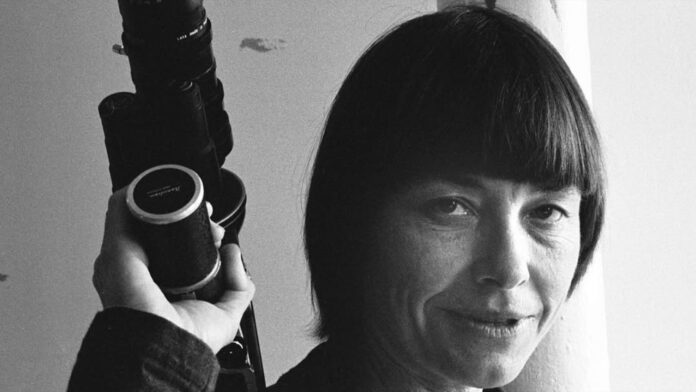
I studied American Studies and History in undergraduate, hoping to be a writer or film critic. I was writing my thesis on Barbara Hammer’s early filmography and was totally inspired. Barbara’s approach to filmmaking struck me as intently fearless and sparked the idea that I could try to make my own films.
Barbara and I had been in touch intermittently about my thesis research, and I emailed her in January 2019 to let her know I was in pre-production on my first short film. She shared that she was in advanced stages of cancer, and wished me the best of luck with my filmmaking. I made a collection of short films, both documentary and scripted, in the years following, and remained steeped in the Hammer world —– making a short on her love story with Florrie Burke, and now, the feature documentary.
Why does this story need to be told now?
Barbara Hammer is still under-recognized in the broader history of cinema, even within American avant-garde film and queer cinema. She spent her entire career pushing boundaries in her work, and ultimately didn’t fit neatly into either canon. With this documentary, I hope to offer a narrative and historical intervention — to affirm Barbara’s place in film history, highlight the reverberating impact she’s had on generations of artists, and introduce her life and work to audiences who may be meeting her for the first time.
At a time in our current socio-political moment when right-wing ideologies push to erase and stifle queer histories, the urgency of Barbara Hammer’s vision for an expansive future comes into clear focus. Barbara Forever restores Barbara’s work within today’s queer cultural zeitgeist, calling attention to challenges historically faced by queer and feminist artists and activists, and offers a guide for how we can preserve our histories and carry them forward in collective memory.
Films are lasting artistic legacies. What do you want yours to say?
I hope Barbara Forever inspires viewers to go out into the world and do exactly what they want to do with their life, artistic or otherwise.
Describe who you want this film to reach.
Artists, queer people, dreamers and beyond who can point to Barbara Hammer’s path as a blueprint for creating a future that we want to exist in. I’m really excited to share Barbara with audiences who don’t yet know her or her cultural impact.
What was your favorite part of making Barbara Forever? Memories from the process?
Spending time with Florrie Burke, Barbara Hammer’s spouse. In the early days of the project, I would spend at least a day a week at her and Barbara’s shared home in Greenwich Village scanning photographs, listening to stories about Barbara, chatting about the world. Meeting Florrie has been one of the biggest gifts Barbara has given me.
I also just really love the edit phase. My editor Matt Hixon and I have a collaboration for the ages, and it was the most intense period of the process being so immersed in Barbara’s images and her literal voice. Watching scenes, and the film at large, shape up day by day felt like seeing magic.
