
A TikTok challenge can leave the screen because it turns an action into a social invitation. A viewer sees someone perform it, watches others reward the attempt, and may then receive a nomination, a template, or an easy way to copy it. That does not mean TikTok mechanically makes people act. It means the platform can change which behaviors are visible, memorable, socially approved, and easy to reproduce.
The most accurate conclusion is conditional: TikTok can increase the salience, perceived normality, and opportunity for imitation, while personality, age, peer context, perceived risk, and offline circumstances help determine whether a person actually participates.
What counts as a TikTok challenge?
Not every viral trend is a challenge. A challenge usually contains a recognizable action and an implicit or explicit invitation for others to repeat, record, and post it. A shared sound, hashtag, caption, editing template, duet, stitch, or nomination often makes participation easier and more public.
| Type | Typical format | Primary pathway |
|---|---|---|
| Creative or performative | Dance, lip-sync, transition | Imitation, identity, belonging |
| Prosocial | Fundraising, volunteering, awareness | Modeling, moral identity, collective action |
| Health or fitness | Exercise, food, appearance, transformation | Social comparison and self-efficacy |
| Risky physical | Fire, choking, projectiles, heights, ingestion | Sensation seeking and risk normalization |
| Illegal or destructive | Theft, trespassing, vandalism, reckless driving | Status and deviance signaling |
| Psychological or self-harm-related | Humiliation, coercion, self-harm content | Contagion and coercive social influence |
“Viral” describes distribution, not safety or moral value. A charity campaign and a dangerous stunt can both be viral while producing very different risks.
#1 Best Overall

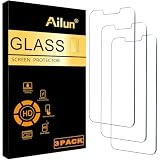
Ailun 3 Pack Screen Protector for iPhone 17e/16e/14/13/13 Pro
- WORKS FOR iPhone 17e/16e/14/13/13 Pro 6.1 Inch Display Screen 0.33mm tempered glass screen protector.Featuring maximum protection from scratches, scrapes, and bumps.[Not for iPhone 16 6.1 inch, iPhone 13 mini 5.4 inch, iPhone 13 Pro Max/iPhone 14 Pro Max/iPhone 14 Plus 6.7 inch, iPhone 14 Pro 6.1 inch]
- Specialty:to enhance compatibility with most cases, the Tempered glass does not cover the entire screen. HD ultra-clear rounded glass for iPhone 17e/16e/14/13/13 Pro is 99.99% touch-screen accurate.
- 99.99% High-definition clear hydrophobic and oleophobic screen coating protects against sweat and oil residue from fingerprints.
- It is 100% brand new,Precise laser cut tempered glass, exquisitely polished,2.5D rounded edges.
- Online video installation instruction: Easiest Installation – removing dust and aligning it properly before actual installation,enjoy your screen as if it wasn’t there.
The psychology: from video to offline action
A useful model is:
Exposure → attention → perceived norm → anticipated reward → social pressure → intention → opportunity → action → public feedback → further spread.
Viewers can drop out at any point. Seeing a video is not the same as approving it; liking it is not the same as attempting it; and attempting it is not proof of injury or lasting behavioral change.
Social learning and imitation
Social Learning Theory explains why visible examples matter. People are more likely to copy models they find attractive, credible, similar, successful, or socially rewarded. A creator’s confidence can function as a behavioral cue even when that person has no relevant expertise.
A video can make an action appear easy by showing a clean setup, a successful attempt, and an enthusiastic reaction. It may omit failed attempts, pain, cleanup, medical treatment, or legal consequences. The viewer therefore learns not only what to do, but also an apparently favorable story about what happens afterward.
Social proof and normative influence
Views, likes, comments, shares, and participant counts can look like evidence that an action is popular, acceptable, or rewarding. Comments may provide encouragement, instructions, competition, or ridicule aimed at people who refuse. Tagging and nominations turn a private decision into an interpersonal obligation.
Popularity is not prevalence. Recommendation systems can make a small number of highly engaging videos appear culturally universal, and views or hashtag uses do not reveal how many unique people participated.
Rank #2

Wiaocit Tempered Glass Screen Protector for iPhone 14
- [Applicable Models]: The screen protector tempered glass and camera lens protector are only applicable for the iPhone 14. They are made of high-quality 0.33mm thick tempered glass with a hardness of 9H grade or more, which has been strengthened at 800 degrees celsius to prevent shattered edges, scratches, and explosions. The iPhone 14 screen protector glass also features a 2.5D rounded edge design, which is touch smooth and won’t scratch your hands.
- [10x Military enhanced protectio]: The iPhone 14 screen protector tempered glass is using double ion-exchange increases ultra-impact protection that’s up to 5X stronger than traditional tempered glass protectors and effectively protects the entire phone screen from compression (under 46kg) or other impacts.
- [Easy Installation]: The screen protector iPhone 14 designed by Wiaocit comes with a simple installation frame that makes it very easy to align the tempered glass with your phone screen and will not leave any bubbles. Enjoy your screen as if the protector de pantalla doesn’t even exist. Please watch our installation video tutorial before installing.
- [Ultra HD & Original Touch]: Wiaocit’s protector break through the defects of the blurred picture of the glass films on the market, highly restore the best visual feast brought by the screen. Our ultra-thin glass innovatively applied a 9th gen oleophobic nano coating (top-notch skin-friendly), effectively reduces fingerprints, oil residue by 98% to make it smoother than original screen!
- [Seamless fit, 1:1 Screen coverage design]: This Anti-White Edge screen protector is tailor-made for: iPhone 14, perfectly fits its curved edges without leaving any gaps, making your phone more noble and elegant.
Belonging, identity, and FoMO
Challenges offer a ready-made way to signal that someone is current, funny, brave, attractive, generous, skilled, or part of a group. Fear of missing out is best understood here as a mechanism, not a diagnosis: the perceived cost of refusing may be social invisibility, exclusion from a joke, or loss of status.
A 2026 study of 720 TikTok users found associations among TikTok-use-disorder tendencies, FoMO, and self-reported everyday cognitive failures. It does not prove that FoMO causes challenge participation, but it supports treating FoMO and problematic engagement as relevant variables rather than merely rhetorical explanations (PubMed).
Novelty, reward, and optimistic risk judgments
Many participants understand that a challenge is risky yet decide that the expected reward is worth it. They may believe they can perform it better than others, that the chance of harm is small, that the video is staged, or that virality will bring valuable recognition. Adolescents may be especially responsive to peer and social rewards, particularly in groups, although individual differences are substantial.
Adolescence is not simply a period of irrationality. It is a period in which identity and belonging are being negotiated, social approval can be highly motivating, and experience may be limited for judging low-probability but severe consequences. Broader adolescent-risk research supports the importance of social context, but it is not TikTok-specific evidence (adolescent risk-taking research).
Fast persuasion and peripheral cues
The Elaboration Likelihood Model distinguishes between careful evaluation of evidence and reliance on peripheral cues such as humor, music, attractiveness, familiarity, popularity, and perceived similarity. In fast-scrolling video, viewers may respond to those cues before considering expertise, contraindications, or consequences.
An analysis of TikTok videos related to the Orbeez Gel Blaster challenge used this model to examine persuasive elements and injury-related content. The study illustrates how entertainment and social cues can compete with risk information, but it does not show that every viewer copies the behavior (Orbeez challenge content analysis).
Rank #3

Ailun Screen Protector + Camera Lens Protector for iPhone 13, 2+2 Pack
- [2+2 Pack] This product includes 2 pack screen protectors and 2 pack camera lens protectors.Works For iPhone 13 6.1 Inch display 2021 tempered glass screen protector and camera lens protector. Featuring maximum protection from scratches, scrapes, and bumps. [Not for iPhone 13 mini 5.4 inch, iPhone 13 Pro 6.1 inch, iPhone 13 Pro Max 6.7 inch]
- Night shooting function: specially designed iPhone 13 6.1 Inch display 2021 camera lens protective film.The camera lens protector adopts the new technology of “seamless” integration of augmented reality, with light transmittance and night shooting function, without the need to design the flash hole position, when the flash is turned on at night, the original quality of photos and videos can be restored.
- It is 100% brand new,Precise laser cut tempered glass, exquisitely polished,0.33mm ultra-thin tempered glass screen protector maintains the original response sensitivity and touch, bringing you a good touch experience.
- Easiest Installation – Please watch our installation video tutorial before installation.Removing dust and aligning it properly before actual installation,enjoy your screen as if it wasn’t there.
- 99.99% High-definition clear hydrophobic and oleophobic screen coating protects against sweat and oil residue from fingerprints,and enhance the visibility of the screen.
How platform design amplifies behavior
TikTok’s features can reduce the friction between watching and reproducing a format:
- Short videos leave little time for deliberation.
- Sounds, hashtags, templates, duets, stitches, and replies provide procedural scaffolding.
- Recommendation systems can repeatedly expose a user to related examples.
- Visible metrics make social rewards immediate and measurable.
- Video demonstrates physical steps more vividly than text.
- Editing can hide failure, injury, risk, or negative consequences.
This does not establish that TikTok deliberately causes harmful acts. Repeated exposure may reflect engagement patterns, user choices, or recommendation processes, and it should not automatically be described as intentional promotion. The American Psychological Association recommends considering the interaction between a young person’s characteristics, content, platform features, and social circumstances.
Why risky challenges can look safe
Risk normalization occurs when repeated examples make an unusual action feel routine. Survivorship bias adds to the problem: viewers mostly see attempts that produced an entertaining video, not the ones that ended in injury, arrest, embarrassment, or medical care.
Ordinary clothing and familiar locations make an activity appear accessible. Humor can reduce emotional processing of danger. A disclaimer may be ignored when the rest of the video rewards imitation. Controlled professional stunts can be especially misleading when copied by untrained viewers without specialist equipment or supervision.
A 2025 study of viral-challenge participation found that perceived risk, perceived safety, social support, anticipated virality, and fear of platform removal shaped willingness to participate. Its studies included 393 participants in a risk-perception experiment and 274 in a scenario-based participation study. This supports a risk–reward mechanism, but it does not establish how often exposure causes injury-producing behavior outside the study (study of viral-challenge participation).
What the evidence actually shows
The evidence supports influence, not a simple “TikTok makes people do things” claim.
Rank #4

WowFluy 3 Pack for Blu View 5 Tempered Glass Screen Protector, Scratch-Proof, Bubble-Free,HD Transparent, 9H Hardness,Bubble Free,Case Friendly
- [Compatibility]: This tempered glass screen protector is compatible with the following models: Blu View 5 (Note: Not suitable for other models).
- [Included Tools]: Each screen protector comes with dust stickers and a cleaning kit, making it super easy to apply without bubbles and keeping your screen nice and clean.
- [Premium Material]: Made from high-quality tempered glass, it boasts excellent hardness to effectively reduce scratches. You’ll enjoy lightning-fast responsiveness and crystal-clear clarity.
- [Craftsmanship]: The tempered glass screen protector features a finely polished 2.5D rounded edge design, providing a smooth touch and a perfect fit for your phone.
- [Customer Support]: We offer quick and reliable after-sales support and service that you can trust.
- Content analyses show how challenges present actions, rewards, risk cues, and persuasive techniques.
- Experiments and scenario studies can test risk perception or willingness, but willingness is not completed behavior.
- Case reports and media accounts establish that particular injuries or incidents can occur, not how common they are.
- Reviews can identify recurring injury and health-risk patterns, but many included studies are observational.
- Correlational studies can identify relationships among platform use, FoMO, appearance comparison, or intentions, without proving direction or sole causation.
A 2025 scoping review searched through 2024, identified 1,651 records, and included 54 articles on risky social-media challenges. TikTok accounted for 31% of platform references and YouTube 52%. Injuries were reported in 89% of articles discussing risky challenges, but the evidence was dominated by observational studies, case reports, case series, reviews, and descriptive research (scoping review of risky social-media challenges).
The distinction matters. Exposure, intention, attempted participation, completed participation, injury, repeated behavior, and long-term change are separate outcomes. A report that someone saw a challenge before an incident establishes timing, not sole causation.
Real-world effects beyond physical injury
Appearance and body image
Body-focused formats can promote thinness ideals, measurement-based comparison, or the belief that a body should be publicly evaluated. A pilot study of three Douyin body challenges examined these pathways. It is evidence of a plausible body-image mechanism, not proof that every viewer develops an eating disorder or other clinical condition (Douyin body-challenge study).
Substance use and health behavior
Viral content can glamorize alcohol or nicotine, making use appear socially rewarding. A systematic review reported associations between such influencer and challenge content and increased intentions or actual use among teenagers, while also noting that social media can support harm-reduction and public-health campaigns (systematic review of social media and health behaviors).
Illegal, privacy, and reputational harm
Some challenges expose schools, homes, body measurements, locations, or vulnerable people. Others can involve theft, vandalism, trespassing, assault, reckless driving, or permanent reputational damage. A participant may understand the social reward but underestimate the legal, educational, employment, or privacy consequences.
Positive challenges are possible
The same mechanisms can support beneficial behavior. Modeling, repetition, group identity, visibility, and social rewards can encourage exercise, creative learning, fundraising, volunteering, safety campaigns, accurate health information, and peer support.
Best Value
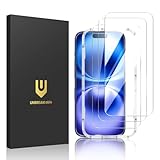
UNBREAKcable 3-Pack Screen Protector for iPhone 16 Tempered Glass
- Perfect Fit & Case Friendly: Designed specifically for iPhone 16. Precisely cut 9H tempered glass. Ensures full access to Dynamic Island, Face ID, and crystal-clear front camera. Strategically sized smaller than the screen to hug curved edges—prevents lift, bubbles, and case interference.
- Clarity & Sensitivity: Our ultra-thin iPhone 16 glass protector is 0.01 inches thick, nearly invisible, and offers 99.9% clarity. Enjoy a vibrant display with silky smooth touch sensitivity for quick, natural responses.
- Double Shatterproof Protection: Made from superior 9H tempered glass, this iPhone 16 protector is twice as strong as standard. It resists scratches and survives drops from 6 feet (1.8 meters) with reinforced edges for exceptional safety.
- Bubble-Free & Anti-Fingerprint: The UNBREAKcable iPhone 16 screen protector uses auto-adsorption to eliminate bubbles and a plasma oleophobic coating to resist fingerprints and smudges. Enjoy a crystal-clear, easy-to-clean screen.
- Super-Easy Installation: This iPhone 16 screen protector kit includes an installation frame, alcohol wipes, dust removal stickers and absorbers, a microfiber cloth, and a guide. Perfect alignment is effortless, even for beginners.
The key question is what the format rewards. A relatively safer challenge encourages informed and voluntary participation in a reversible activity. A dangerous one rewards escalation, humiliation, concealment of consequences, or pressure to prove commitment.
A practical pause test before participating
- What exactly is being copied? Describe the action without the music, humor, or editing.
- What is the worst plausible outcome? Consider injury, poisoning, choking, humiliation, property damage, legal trouble, or disclosure of private information.
- Would I do it if nobody could see or reward me? If not, social pressure may be driving the decision.
- Are the examples selectively edited? Look for missing failures, warnings, cleanup, or recovery.
- Is the creator qualified? Popularity is not medical, fitness, legal, or safety expertise.
- Can harm be stopped immediately? Irreversible or rapidly escalating activities deserve a no.
- Does it require fire, weapons, vehicles, chemicals, electricity, medication, choking, projectiles, or heights? Treat these as major warning signs.
- Is participation genuinely voluntary? Nominations, ranking, mockery, and threats are pressure, not consent.
- Would I be comfortable with this video being seen by a family member, teacher, employer, or emergency physician?
- Can the idea be adapted safely? Preserve the creative or prosocial purpose without reproducing the hazard.
Do not attempt, film, or redistribute dangerous or self-harm-related challenges. If necessary, save identifying information only for reporting, use the platform’s reporting process, and contact emergency or crisis services when someone faces immediate danger.
What parents and educators can do
Conversation is more useful than treating every trend as a moral emergency. Ask a young person what the challenge rewards, what risks are missing from the video, and whether participation is voluntary. Discuss the difference between popularity and prevalence, and practice turning a risky format into a safe one.
Caregivers can use TikTok’s Restricted Mode, Family Pairing, and screen-time tools. These controls can reduce exposure or add friction, but TikTok’s descriptions of them are not independent evidence that they prevent imitation. They should supplement, not replace, trust, supervision, and media-literacy coaching.
Educators can analyze editing, creator incentives, omitted consequences, and persuasive cues without replaying harmful material unnecessarily. The lesson should be about evaluating media, not making a dangerous trend more visible.
What creators and platforms should do
Creators should not demonstrate dangerous acts, even with disclaimers. They should avoid tagging or pressuring specific people, protect private locations and vulnerable participants, and offer safe alternatives. When correcting a harmful trend, describing the danger without reproducing actionable instructions is often safer.
Platforms can improve detection of challenge formats rather than only individual videos, add friction before sharing dangerous content, clarify reporting pathways, provide authoritative context, and evaluate interventions with transparent, independent outcome measures. TikTok’s advertising policy says dangerous activities and challenges are not allowed in advertising, but that policy is not evidence that all harmful organic content is immediately detected or removed (TikTok advertising policy).
Bottom line
TikTok does not control behavior in a mechanical sense. It can, however, reshape the environment in which behavior is noticed, copied, rewarded, normalized, and repeated. The real-world effect of a challenge depends on the interaction among the content, the person, the peer group, the opportunity to act, perceived risk and reward, and platform design.
The most defensible question is therefore not “Did TikTok cause this?” but “Which mechanisms increased the likelihood of participation, what evidence supports that link, and what intervention could reduce harm without ignoring the platform’s capacity for creativity and collective action?”
Product prices and availability are accurate as of the date/time indicated and are subject to change. Any price and availability information displayed on Amazon at the time of purchase will apply.
