
Spotify Lossless is a real technical upgrade, but not a guaranteed listening upgrade. Eligible Premium subscribers can stream up to 24-bit/44.1 kHz FLAC instead of Spotify’s previous top setting of roughly 320 kbps. The option is included with eligible Premium access, yet it must be enabled on each device and may deliver little audible benefit through ordinary Bluetooth earbuds, phone speakers, cars, or noisy commutes.
For quiet-room listening with wired headphones, a USB DAC, or a compatible Spotify Connect speaker, Lossless is worth trying. For everyone else, better fit, better isolation, and a quieter environment may matter more than changing the file format.

What Spotify Lossless actually changes
Lossless audio preserves the information in the supplied lossless master instead of discarding some of it through lossy compression. Spotify’s advertised ceiling is 24-bit/44.1 kHz FLAC—a 44.1 kHz sample rate associated with CD audio, but with 24-bit depth rather than standard 16-bit CD encoding. Spotify announced the public rollout in September 2025 and says the feature is available on mobile, desktop, tablet, and many Spotify Connect devices.
That description matters because “lossless” is a property of the audio file, not a promise that every recording will sound exceptional. It cannot restore information missing from the original master. It does not automatically provide a better mix, better mastering, greater dynamic range, higher volume, or a different album version. A compressed recording with an aggressive master does not become a carefully mastered recording merely because Spotify delivers it as FLAC.
#1 Best Overall
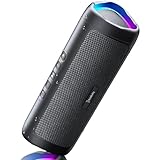
Bluetooth Speaker, 20W HD Sound, Portable Wireless, IPX5 Waterproof, Up to 24H Playtime, TWS Pairing, for Home/Party/Outdoor/Camping/Beach Essentials, Electronic Gadgets, Birthday Gift (Black)
- [Immersive Sound Experience & Dual Connectivity] Experience unparalleled sound quality with this wireless Bluetooth speaker’s 2 drivers and advanced technology that delivers powerful, well-balanced sound with minimal distortion. Connect two speakers together to create an immersive stereo sound experience and fill any room with powerful sound. Perfect for gaming, music, and movie playback
- [Tough & Weather-Resistant] Engineered to handle rough use and adverse weather conditions, this speaker features a durable design and an IPX5 rating for protection against water splashes and spills. It’s an ideal choice for outdoor events, and is perfect for use at parties, at the pool, on the beach, while camping or hiking, and more
- [Long-lasting Playtime & Extended Bluetooth Connectivity] Experience extended playtime with up to 24 hours(50% Vol and light off) per charge and extended wireless range with Bluetooth 5.3, reaching up to 100 feet from your device. The multicolor lights on the speaker can also be turned off with a simple button press to save the battery and adapt to your needs. Keep in mind that the actual playtime can vary depending on volume level, audio content, and usage
- [Vibrant Light Effects] Bring a new level of excitement to your party with the dynamic multi-color light show that syncs to the beat of the music, you can easily customize the light effects to suit your preference by simply pressing the Light button. Make any gathering more memorable with these visually stunning light effects that will elevate the atmosphere
- [Everything You Need] The package includes 1 waterproof Bluetooth speaker (Item Dimensions D x W x H: 7.87″D x 2.76″W x 2.81″H, Weight: 1.28lb), 1 Type-C charging cable, and a quick start guide, all backed by lifetime technical support. The built-in microphone allows for hands-free phone calls and you can also play music from other devices using the AUX jack (not included). It’s a perfect gift for men and women. It is also suitable as white elephant gifts for adult, stocking stuffers for men and women, Christmas gifts,birthday gifts, mothers day gifts,fathers day gifts,Valentine’s Day,mens gifts,and various anniversary gifts for him.
Spotify says artists and distributors need to provide one high-quality stereo master and that it prefers FLAC, while also accepting WAV under its specifications. The resulting stream therefore reflects the quality and characteristics of the supplied master. Spotify’s announcement says Lossless covers nearly every song—not literally every recording in every market.
The comparison that matters: Very High versus Lossless
The relevant comparison is not low-quality Spotify versus Lossless. It is Spotify’s highest lossy setting—usually described as approximately 320 kbps—versus Lossless.
Comparing Lossless with a low-quality setting can make the improvement appear dramatic. Comparing it with Very High is more realistic. Lossless preserves more source data, but the remaining difference is often subtle and depends on the recording, playback equipment, listening environment, and listener.
With a revealing recording and careful, level-matched listening, some people may notice slightly cleaner transients, more texture in vocals or instruments, less haze around complex sounds, or more convincing room ambience. Those differences can disappear when the track is heavily limited, distorted, deliberately lo-fi, or packed with dense layers. Noise, poor earbud fit, low listening volume, and casual attention can mask them just as effectively.
There is no responsible universal verdict that everyone will hear a large improvement—or that nobody can hear one. The technically better file and the perceptibly better experience are related, but they are not identical.
Why Bluetooth makes the upgrade complicated
The simplest way to understand the problem is to follow the signal:
Rank #2
Sale

Anker soundcore 2 Portable Bluetooth Speaker, 24-Hour Playtime, IPX7
- Outdoor-Proof Speaker: Portable design with IPX7 waterproof protection to safeguard against splashes, waves, and water vapor. Get incredible sounds at home, on camping trips, or for outdoor adventures.
- 24H Non-Stop Music: With Anker’s world-renowned power management technology and a 5,200mAh Li-ion battery, the soundcore 2 speaker delivers a full day of great sound.
- Powerful Sound: The speaker features 12W power with enhanced bass from dual neodymium drivers. An advanced digital signal processor ensures pounding bass and zero distortion at any volume.
- Intense Bass: Our exclusive BassUp technology and a patented spiral bass port boost low-end frequencies to make the beats hit even harder. The soundcore 2 speaker delivers vibrant audio for home theater nights, beach parties, and sitting around a campfire.
- Grab, Go, Listen: A classic design refined with simple controls and effortless portability. Easy to use and take anywhere, and supports wireless stereo pairing.
Spotify Lossless source → phone or computer → Bluetooth codec or wired output → headphones or speakers → room and listening environment
If the signal travels over a conventional Bluetooth connection, the lossless source is commonly re-encoded before it reaches the headphones or speaker. The Spotify file can therefore be lossless while the complete path to your ears is not lossless in the strict sense.
That does not mean Bluetooth headphones sound bad, nor does it mean Lossless is automatically useless with every wireless product. It means the wireless link creates another bottleneck, and the benefit you might otherwise hear can be reduced or masked. Device implementation, codec behavior, headphone quality, fit, and isolation all matter.
This is particularly inconvenient for phone users. On iPhones, a conventional wired headphone setup generally requires a compatible USB-C or Lightning audio adapter or an external DAC. Wireless earbuds remain the easiest option physically, but they are not the clearest route to evaluating a lossless source.
As SoundGuys notes, fit and isolation may produce a larger practical improvement than Lossless during a commute. A better seal blocks more outside noise and improves bass consistency; no streaming setting can compensate for an earbud that fits poorly.
Where Spotify Lossless is worth using
- Quiet rooms: A silent office, listening room, or home environment gives subtle differences a chance to remain audible.
- Wired headphones or speakers: A wired path avoids the additional Bluetooth re-encoding stage.
- USB DAC or capable headphone output: This can preserve the source signal, although a DAC is not automatically an audible upgrade over a competent modern device.
- Compatible Spotify Connect equipment: Spotify says Lossless works with many Connect devices, including products from brands such as Sony, Bose, Samsung, and Sennheiser. Exact model and firmware support still matter.
- Attentive listening: Album listening and deliberate comparisons are more revealing than background playback.
Acoustic jazz, solo piano, chamber music, classical recordings, sparse vocal tracks, folk, singer-songwriter recordings, and well-recorded live sessions may expose low-level ambience, decay, texture, and separation more readily. These are tendencies, not genre guarantees: mastering and production matter more than the label attached to the music.
Where it is unlikely to repay the inconvenience
- Standard Bluetooth earbuds used most of the time
- Phone speakers
- Cars and public transport
- Gyms, streets, airports, and other noisy locations
- Poorly fitting or poorly isolating earphones
- Heavily compressed pop, dense metal, loud EDM, and intentionally degraded recordings
- Limited cellular-data plans or phones with little free storage
“Unlikely to repay” is more accurate than “pointless.” You may still prefer Lossless, and enabling it on Wi-Fi costs eligible Premium users no separate advertised audio surcharge. But if the listening chain and environment conceal the difference, the larger files and extra configuration do not buy much in practice.
The inconvenience bill
More data and storage
Lossless streams are substantially larger than compressed streams. Spotify provides separate quality controls for Wi-Fi, cellular data, and downloads, along with estimated data requirements. The practical costs are higher cellular usage, longer downloads, more storage consumption, and potentially more network activity.
Spotify recommends at least 1 GB of free space for downloads, although the actual requirement depends on how much music you save and at what quality. Its Premium offline-download information says users can download up to 10,000 songs per device across up to five devices. A large offline library can therefore become a storage-management problem rather than an audio problem.
Settings are per device
Spotify requires Lossless to be enabled manually on each device. A setting changed on your desktop does not necessarily change the setting on your phone, tablet, or another family member’s device. Streaming quality and download quality are separate choices, so a user can enable Lossless for Wi-Fi while retaining Very High for cellular listening.
Spotify’s support documentation says the service automatically selects the best playback format based on the setup. That is convenient for the service, but less transparent for anyone trying to confirm what is actually reaching the headphones.
Connect and firmware dependencies
Spotify Connect support is not a guarantee that every model from a supported brand receives Lossless. A speaker or receiver may require a firmware update, and support can depend on the exact hardware implementation. If the Lossless option is missing or a Connect device does not appear eligible, check Premium eligibility, the rollout status in your market, the current Spotify app, the device model, and the manufacturer’s firmware.
Rank #4
Sale
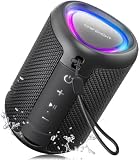
Portable Bluetooth Speaker Beach Essentials: IPX5 Waterproof for Outdoor
- Engineered with premium craftsmanship, this portable speaker features a space-saving form measuring a mere 2.99 inches (7.6 cm) in width and length, and 4.25 inches (10.8 cm) in height. Ultra-lightweight at just 0.582 lbs (264g), it slips effortlessly into any bag. Driven by a robust 20W peak power, it delivers immersive audio with punchy bass and crisp highs, while its 15W continuous output ensures crystal-clear sound for indoor relaxation or outdoor adventures
- 【Beach Day Essential – IPX5 Waterproof & Sand-Resistant】 From splashing in the waves to lounging by the pool, this speaker is built for summer adventures. With IPX5 waterproof protection, it handles ocean mist, sudden rain showers, and poolside splashes without skipping a beat. When the sand settles, just rinse it off and it’s ready for the next beach day. Also perfect for shower sing-alongs, backyard sprinklers, or any splashy fun
- 【Portable Companion – From Beach Tote to Garage Bench】 Ultra-lightweight at just 0.58 lbs, it slips easily into your beach bag, gym backpack, or work toolbox. Take it from the shoreline to the garage workshop, from the office desk to the camping tent. The built-in lanyard lets you hang it on a beach umbrella, bike, or shower caddy—so your music stays close, wherever you are
- 【Dynamic Light Show – Sets the Vibe Day or Night】 As the sun sets on the beach, let the beat-syncing LED lights turn your bonfire gathering into a glowing party. By day, it’s a fun accent for poolside lounging; by night, it transforms your bedroom, dorm, or backyard BBQ into a mini celebration. The lights dance to your music, adding energy to every moment—whether you’re hosting or just chilling
- 【Crystal-Clear Sound & 15H Battery – From Sunrise to Late Night】 Powerful 15W (20W peak) audio with zero distortion fills the space—whether you’re on a crowded beach, in the living room, or cooking in the kitchen. With up to 15 hours of playtime, it keeps the soundtrack going from early morning yoga on the sand to late-night gaming or movie marathons at home
Downloads may need attention
If you change the download-quality setting, inspect important offline playlists rather than assuming existing files have been replaced. In practice, the safest approach is to remove and redownload important downloads after changing quality, provided you have enough storage. Spotify’s current app behavior should be checked if the setting does not appear to take effect.
How to enable it without wasting data
- Open Spotify’s Media Quality settings.
- Choose Lossless for Wi-Fi if you want full-quality streaming at home.
- Choose a lower setting, such as Very High, for cellular data if your mobile allowance is limited.
- Select Lossless separately for downloads if you want offline files in that quality.
- For Spotify Connect, select the target device and look for the File Quality card or corresponding Lossless control.
- On each additional phone, computer, or tablet, repeat the setup.
- Use a wired connection when you want to evaluate the difference seriously.
If Lossless is unavailable, the likely explanations are account eligibility, regional rollout, an outdated app, unsupported hardware, or outdated firmware. Spotify announced expansion to more than 50 markets in October 2025, but that dated announcement is not proof that every Premium plan worldwide has identical access today.
Three sensible setups
For the casual listener
Keep cellular playback on Very High. Try Lossless over Wi-Fi if you are curious, but do not purchase headphones, a DAC, or a speaker solely because Spotify now offers the option. Improve fit and isolation first.
For the home listener
Enable Lossless for Wi-Fi and downloads. Use wired headphones or a compatible Connect speaker, then compare familiar acoustic or vocal recordings at matched volume. If you cannot reliably hear a preference, there is no obligation to keep the larger files.
For the audiophile
Confirm the exact device and firmware support, and prefer a wired DAC/headphone or speaker chain for evaluation. Compare the actual master, not only the advertised resolution. Spotify’s 24-bit/44.1 kHz ceiling may be sufficient for your library, but listeners who specifically want higher-resolution material or more specialist metadata may prefer another service.
Is 24-bit/44.1 kHz enough?
Spotify’s maximum format is not the same as the highest number offered by every competitor. Some services advertise higher sample rates and hi-res tiers. That difference is relevant when comparing specifications, but higher numbers are not an automatic guarantee of better or more audible sound.
Best Value

JBL Charge 6 Portable Bluetooth Speaker, Waterproof, Drop-Proof – Black
- JBL PRO SOUND + AI BOOST: How does the already great JBL Charge sound profile get even better? AI Sound Boost analyzes music in real time—delivering bigger bass, crisper highs, and maximum acoustic performance with less distortion. Same portable speaker, bigger punch.
- 28-HOUR BATTERY: Keep the mood alive for 24 hours on a single charge—then squeeze out 4 more with JBL Playtime Boost (thanks, long battery life). This portable Bluetooth speaker outlasts the longest days and the wildest nights.
- IP68 WATERPROOF DESIGN: Have you ever dropped your speaker, had it roll down a dusty hill and land in a lake? This waterproof, dustproof, drop-proof bluetooth speaker survives 1m drops and submersion up to 1.5m.* Throw parties instead. *Lab conditions apply.
- MULTI-SPEAKER CONNECTION: Wouldn’t it be great to share the vibes with your whole crew? Auracast lets you stereo pair two Charge 6s or link multiple JBL Auracast-enabled speakers wirelessly—covering more ground (and more ears) with the same playlist.
- FAST CHARGING + POWER BANK: No low-battery panic here. Fast charging gets you up to 150 minutes of playtime from just 10 minutes plugged in—plus a built-in power bank keeps your phone charged while the music keeps going.
Sample rate and bit depth describe how audio is represented. They do not determine the quality of the mastering, the performance of the headphones, the room, or the listener’s ability to distinguish small changes. The meaningful question is whether the complete chain and the particular recording benefit—not whether a specification sheet contains the largest number.
Do loudness-normalization settings undermine Lossless?
No. Lossless encoding and loudness normalization address different things. Lossless concerns the preservation of audio data; normalization changes playback gain so tracks do not vary as dramatically in perceived loudness.
Spotify says Lossless changes sound quality rather than loudness, and that loudness normalization remains active regardless of format. This is important in comparisons: the louder version often seems better even when the difference is only level. Match volume as closely as possible before deciding whether Lossless improves a track.
Should you switch from Spotify?
Switching services should be a workflow decision, not simply a resolution contest.
| Service | Likely strength | Potential reason to choose it |
|---|---|---|
| Spotify | Discovery, playlists, social features, and Spotify Connect | You already use Spotify’s ecosystem and want included Lossless on suitable equipment |
| Apple Music | Apple-device integration and a mature lossless offering | You live in Apple’s ecosystem and value its device integration |
| Tidal | Audio-focused positioning and hi-res options | Maximum-resolution options matter more than Spotify-style discovery |
| Qobuz | Specialist hi-fi catalog presentation and hi-res availability | You value detailed metadata and an audiophile-oriented service |
Catalog versions and masters can differ. A lossless Spotify file may sound less appealing than a lossy file from another service if the latter uses a preferable master. Conversely, another service’s higher-resolution option may make no audible difference in your system. Check current plans, prices, regional availability, and device support on the providers’ official pages before switching: Spotify Premium, Apple Music, Tidal, and Qobuz.
What to improve before buying hardware
- Move critical listening to a quieter room.
- Improve ear-tip fit or speaker placement.
- Use Wi-Fi rather than cellular data.
- Confirm the correct Media Quality setting.
- Try a wired connection if convenient.
- Only then consider whether a DAC, amplifier, headphones, or new streaming service addresses a real limitation.
A DAC can help when an existing output is noisy, incompatible, or unable to drive the headphones properly. It is not automatically an audible improvement over a competent phone or computer output. Likewise, expensive wired headphones are a poor purchase for someone who primarily listens outdoors, dislikes cables, or expects Lossless to transform every track.
Verdict
Spotify Lossless is technically superior and practically conditional. Existing eligible Premium subscribers who listen at home through wired equipment or a supported Connect system should enable it on Wi-Fi and judge it for themselves. Bluetooth-first listeners should expect a modest or imperceptible difference, especially in noisy places. Users with limited data or storage should use Lossless selectively.
The feature’s real weakness is not that lossless audio has no value. It is that Spotify improves the source file without simplifying the chain required to benefit from it. That makes Lossless a welcome option—and an inconvenient improvement.
Product prices and availability are accurate as of the date/time indicated and are subject to change. Any price and availability information displayed on Amazon at the time of purchase will apply.
