
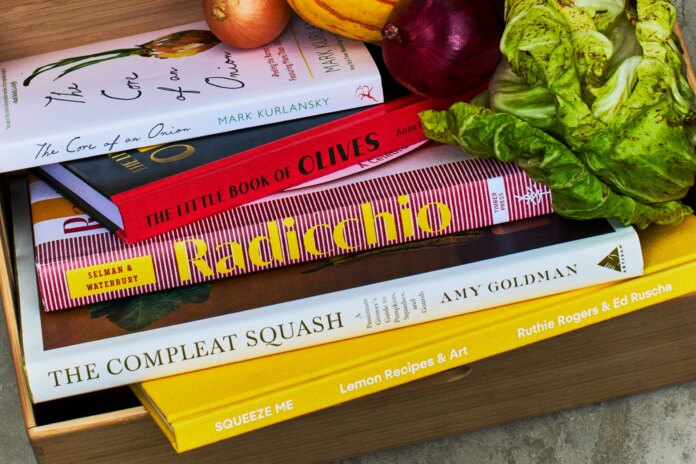
If you’ve ever been starstruck by a perfect Cinderella pumpkin or a stately stalk of Brussels sprouts, you likely understand the appeal of a book focused on a single fruit or vegetable. While books like this aren’t always long, they typically go deep, with the fervor of an author who is fully obsessed.
One charming example, The Core of an Onion: Peeling the Rarest Common Food by Mark Kurlansky, melds authority with a dose of irreverence. First published in 2023, it’s a slim 200 pages, but the writer (who’s also written nonfiction books dedicated to oysters, salt, and cod) packs a lot in. “Onions have a way of taking on unexpected significance,” he posits. The first section covers the allium’s history and cultural impact. (Did you know that ancient Egyptians tied them to mummies’ feet as a preservative?) Kurlansky then offers loosely structured recipes for breads, sauces, and more, all centering the humble bulb.
Elevating a perhaps overlooked ingredient is a core tenet of single-subject cookbookery. In The Compleat Squash: A Passionate Grower’s Guide to Pumpkins, Squash, and Gourds, a canonical 2004 ode to members of the Cucurbitaceae family, master gardener Amy Goldman Fowler’s passion is abundantly evident. “Sometimes I don’t know where pumpkins begin and I end,” she writes, before segueing into a series of squash and gourd portraits, each showing an individual specimen more striking than the last. Fowler shares recipes too, in addition to breed spotlights, resources for seed buying, and advice on growing your own.
Some such tomes aim to introduce the reader to the joys of less ubiquitous ingredients. Lane Selman and Margarett Waterbury’s Radicchio: A Celebration of the Beloved Italian Vegetable tells the “human and natural history” of the bitter chicory, along with instructions for how to grow it and cook with it. Selman is the founder of the Culinary Breeding Network, an initiative that rallies scientists, farmers, and chefs to geek out over new produce varieties. The book gets weird in the best way possible, with profiles of Italian growers and recipes including gnocchi with radicchio pesto, radicchio with prosciutto gratin, and chocolate–radicchio cake (why not?).
Radicchio reads almost like a community cookbook, and that’s intentional. Selman’s inspiration to pursue the topic was the sheer lack of writing on this oddball vegetable: “All of these people that we’ve met on our way down the rabbit hole needed to be included,” she says. “They’re the ones who have given us all this information. Sometimes it takes a village.”
Other single-subject cookbooks showcase pantry staples that are rarely in the spotlight. Anna Hezel’s Little Book of Olives: A Guide to Cooking, Eating, and Drinking for the Brine-Inclined presents recipes including cantaloupe and crushed-olive panzanella, Castelvetrano and pistachio pesto, and a whole chapter of olive desserts, plus shopping tips and a breakdown of varieties. The book’s retro aesthetic lends gravitas to an ingredient often relegated to garnish status.
Finally, some books exist more to dazzle than to inform, as is the case with pop artist Ed Ruscha and River Café chef Ruthie Rogers’s 2025 release Squeeze Me: Lemon Recipes & Art. In the pair’s high-gloss love letter to the lemon, pop art–coded photos with cheeky captions and a suite of minimalist recipes—such as lemon–mascarpone tart and limoncello—make this ode to the simple citrus equally at home on a coffee table or the kitchen shelf.
While styles and forms vary, these books serve a common goal: to illuminate the sometimes surprising pleasures of a particular fruit or vegetable. That they manage to do so in such delightful fashion is proof that, once in a while, working with less really is more.
