
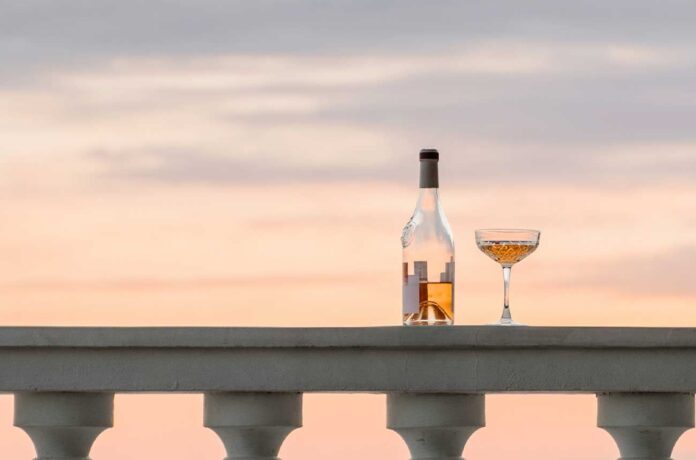
Few wines are as loved and as underestimated as rosé. It sells by the poolful every summer, yet it is rarely taken as seriously as the reds and whites it sits between, often filed away as an easy, uncomplicated pleasure and little more. That reputation does it a disservice. Look closely and rosé turns out to be one of the most varied and rewarding categories in wine, capable of far more than a pale glass on a warm afternoon.
Part of the misunderstanding comes down to how little most drinkers know about how rosé is made. Most still rosé is not, as some may assume, red and white wine blended together. In the EU, the practice is generally restricted in still-wine production, although it is permitted for certain sparkling wines – most famously rosé Champagne. Instead, most rosé takes its colour from brief contact between clear juice and dark grape skins, and it is the length of that contact that decides the style.
A quick pressing, with the juice drawn off after only a few hours, gives the pale, delicate wines Provence is known for. Leave the skins in longer, sometimes a day or more of maceration, and the result deepens into something fuller and more fruit-driven. Other rosés come from the saignée method, where juice is bled off a fermenting red to concentrate it, and the pink run-off becomes a wine in its own right. Each route lends a different colour, weight and character, which is why no two rosés are quite alike.
Geography widens the category even further. Provence remains the spiritual home, and rightly so: its pale, dry, herb-scented style set the template the world now follows. But rosé is made almost everywhere wine is, and the results are gloriously diverse. The southern Rhône turns out darker, sturdier pinks built from the heat and for the table. Spain and Italy age some rosés in oak, giving them structure and the ability to improve for years. Cool-climate corners of England and northern Italy make sparkling and delicately aromatic styles. And a growing number of producers are reaching for indigenous grapes that give their rosés a genuine sense of place.
That range is exactly what this year’s Decanter World Wine Awards (DWWA) brought to light. In France alone, 359 rosés were awarded medals across eight regions, from Bordeaux and the Loire to Corsica, Beaujolais and the southwest, and that was before the tasting travelled beyond France altogether.
The five wines below were chosen to show the category at its most surprising: a sparkling English pink, a barrel-aged Rioja with the gravity of a serious red, a rosé from a Croatian grape few will have tasted, and two Mediterranean wines that prove there is life well beyond the Provençal template.
Consider it an invitation to look at rosé afresh. There is a great deal more here than first meets the eye, and a great deal more to enjoy. Rosé, it turns out, is a technique, not a place, and never just one shade of pink.
DWWA 2026: Top-scoring rosé wines to explore
Lunae, Mea Rosa, Liguria di Levante, Liguria, Italy 2025

(Image credit: Liguria di Levante)
Platinum, 97 points
A summer dream! An incredible vibrancy of rose petals, red cherries, raspberries and strawberries dives into the plush, juicy palate speckled with fresh herbs and spices adding complexity and verve. Joyous and full of life. Alcohol 12.5%
Winding Wood, Rosé Brut, Berkshire, England 2022

(Image credit: Winding Wood)
Platinum, 97 points
Ethereal rose garden and subtle strawberry and red apple aromatics weave into the plush toasted brioche core. Beautifully fresh with a gentle yet persuasive mousse and a long, allusive finish. An allegory of national intent. Alc 12%
Ante Sladić, Opol Lasina, Dalmatinska Zagora, Coastal, Croatia 2025

(Image credit: Dalmatinska Zagora)
Gold, 96 points
Burgeoning ripe strawberries pervade the nose and palate gathering freshness in their wake. Fabulous cleansing acidity pierces the peppy fruit texture and teases out the length. Alc 12.5%
Domaine La Cendrillon, Minuit, Corbières, France 2025

(Image credit: Domaine La Cendrillon)
Gold, 96 points
Meticulously crafted with peach, red apple, raspberry and cherry fruit lined with a spicy, savoury elegance. Fleshy and impactful with citrus acidity and energising length. Alc 13.5%
Hacienda López De Haro, Classica, Gran Reserva, Rioja, Spain, 2016

(Image credit: Hacienda López De Haro)
Gold, 96 points
Showstopping, classic and well-aged, yet with plenty of time ahead. A complex structure infused with dried cranberries and damp earth over bracing acidity and lingering length. Alc 12.3%
Discover all winners at awards.decanter.com

(Image credit: Future)
