
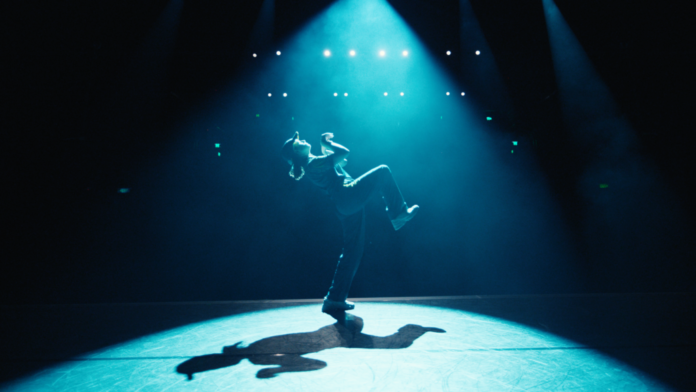
When breaking was first announced as an Olympic sport for 2024, no one would have guessed that a performance that scored zero points would end up dominating the coverage. But Rachael “Raygun” Gunn’s cringey three rounds in Paris spawned endless memes, an impression on Jimmy Fallon’s late-night show, and even a parody musical.
Hip-hop dance artist Tiffany Bong, an assistant professor at the University of Southern California, says the moment remains a lightning rod. “When my students hear about the Olympics and breaking,” she says, “they still all think of one thing: Raygun.”
Now, a new Netflix Untold series documentary titled Raygun: Breaking Badly shares how the b-girl from Australia even made it to the Olympics, and what the global viral pile-on was like for her.
The way the film explains Gunn’s story is that she didn’t have a ton of competition at the qualifier, and she put up a decent enough showing to squeak through. But then she realized the Olympic judges would mostly reward power moves, which had never been her strength, and anxiety took over. In Paris, after scoring zero points in the first two rounds, she decided to pull out some of the oddball moves her husband/coach had choreographed for her as an homage to Australia—including the now-iconic kangaroo pose.
“Watching the documentary, it’s clear she knew she wasn’t ready,” says Ivan “Flipz” Velez, a longtime b-boy who judged some of the final qualifying rounds for Paris. When he spoke to Dance Magazine four days after the documentary debuted, he’d already watched it four times, trying to make sense of how Gunn slipped through the cracks.
On one level, it’s hard not to feel sorry for Gunn, who endured severe online abuse and harassment simply for dancing. At the same time, some found Gunn’s performance not just silly, but offensive—particularly since Gunn wrote her PhD dissertation on breaking. “How do you have a doctorate and you lack the simple knowledge of the ABCs of breaking? Did you even study the culture?” Velez asks.
Multiple artists in the breaking community that Dance Magazine reached out to for comment chose not to watch the film at all, or said they didn’t want to give any more oxygen to the Raygun narrative.
“You have a woman who’s not from the original community, who’s benefiting from culture from Black and brown communities—people that are still alive today,” Bong says. The global platform Gunn has been given post-Olympics, including in this documentary, could have been an opportunity to shed light on the pioneers of the art form, Bong points out.
Some b-girls and b-boys have expressed concern that not just Raygun but breaking as a whole will now be seen as a joke by mainstream audiences. “It’s an erasure of the culture, and it’s really heartbreaking,” Bong says. Still, she points out, breaking has survived and adapted through 50-plus years of expansion, commercialization, and appropriation. She hopes the community can find a way to use the Raygun phenomenon to its advantage. “I feel we’ve been given a setup because right now, the visibility is pretty high,” she says.
Although breaking won’t be in the next summer Olympics in Los Angeles, it could potentially be included again—in Australia, of all places—in 2032. As controversial as the form’s Olympics debut was, Bong hopes it gets a redemption round, with more intention behind who gets put in the judges’ seats and leadership positions.
For his part, Velez isn’t worried about permanent damage. “The culture is thriving and has always thrived underground,” he says. “Not one person, not one b-girl, not one Olympic game can suffocate this culture, this community.”
