
No newly rediscovered complete Apollo 11 broadcast has been established. NASA’s search for the original raw telemetry tapes was unsuccessful, and NASA released restored moonwalk footage in 2009 using surviving broadcast-format recordings. A separate event came in 2019, when Australia’s National Film and Sound Archive received a restored copy of the official broadcast held by CSIRO.
Were the Apollo 11 moon landing tapes rediscovered after 55 years?
Not according to the available institutional accounts. NASA reported in 2009 that a three-year search for the original telemetry tapes had failed. The distinct 2019 event was the donation to Australia’s National Film and Sound Archive (NFSA) of a restored version of CSIRO’s official broadcast copy. Neither event establishes that a previously lost, complete broadcast was newly discovered in 2024. NASA’s account of the restoration and the NFSA and CSIRO release describe those separate histories.
What happened to the original Apollo 11 recordings?
The lunar module’s small television camera transmitted a non-standard slow-scan television signal. At receiving stations on Earth, engineers recorded the original signal on one-inch telemetry tapes. They also converted the image signal into a format suitable for standard television broadcast. NASA’s technical report catalog describes those recording and conversion operations.
NASA’s 2009 account identifies the missing material as backup recordings of signals from the lunar module. Their unsuccessful search does not mean every recording of the moonwalk vanished: broadcast-format copies survived in archives and were used to produce the restored presentation.
How NASA assembled the 2009 restored moonwalk
NASA’s restoration team gathered broadcast-format material from several sources: a tape copy recorded at NASA’s Sydney video switching center, original CBS News archive broadcast tapes made from feeds from Johnson Space Center, and kinescopes found in Johnson’s film vaults. NASA says Lowry Digital selected and digitized the best available material, then enhanced it with proprietary software and other restoration techniques. The July 2009 release initially highlighted 15 scenes from the moonwalk. NASA’s restoration account quotes Richard Nafzger, the NASA Goddard engineer overseeing television processing at the Apollo 11 tracking sites, saying, “The restoration is ongoing and may produce even better video.”
The Apollo 11 Restored Video project describes the complete restoration as assembled from the best portions of surviving recordings. Its account says much of the footage came from Parkes, with some previously unseen material from Honeysuckle Creek; the restoration included image repair, noise reduction, vignetting correction, stabilization, and brightening. Those details are the project’s description of its work, not evidence that the original raw telemetry tapes were recovered. The project also attributes the statement “This restored video is a valuable contribution to space exploration and space communication history” to Neil Armstrong; its page does not provide a date or context for that attribution. Apollo 11 Restored Video project
Rank #2
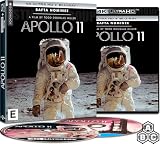
![Apollo 11 [Bonus Features] [4K UHD + Blu-ray] [Region Free]](https://m.media-amazon.com/images/I/51YY59ezk0L._SL160_.jpg)
Apollo 11 [Bonus Features] [4K UHD + Blu-ray] [Region Free]
- Acclaimed documentary capturing the historic Apollo 11 moon landing using restored original footage.
- Includes 4K Ultra HD and Blu-ray discs for exceptional picture quality and viewing flexibility.
- Bonus features with additional content and archival material.
- Region Free release compatible with 4K UHD and Blu-ray players worldwide.
- Ideal for fans of space exploration, history documentaries, and premium physical media.
What Australia’s 2019 Apollo 11 archive donation means
NASA gifted CSIRO the only official copy of the broadcast held outside the United States, recognizing Australia’s support for Apollo 11. In 2019, a digitally restored version of that copy was donated to the NFSA. This was the preservation and donation of an existing official copy—not the recovery of NASA’s missing raw telemetry tapes. NFSA and CSIRO’s 2019 announcement
The Australian stations and telescope played distinct roles in relaying the television signal. According to the NFSA and CSIRO, NASA used the Honeysuckle Creek signal for the first nine minutes of the broadcast, including Neil Armstrong’s first step, then switched to the stronger Parkes signal for the remainder of the two-and-a-half-hour broadcast. The global relay involved NASA’s Goldstone and Honeysuckle Creek stations and CSIRO’s Parkes radio telescope.
How to watch the restored Apollo 11 moonwalk
NASA+ lists an official restored-moonwalk video page: Apollo 11 Moonwalk on NASA+. The page confirms an official viewing option, but does not guarantee that it will remain continuously available. The Apollo 11 Restored Video project also describes a DVD containing the complete 2009 restoration; current retail availability and edition details are not established on the basis of that description. Apollo 11 Restored Video project
Why the broadcast was technically remarkable
The NFSA and CSIRO describe the lunar module’s television system as transmitting with a 66-centimetre radio dish and 20 watts of power across roughly 384,000 kilometres to Earth. They report that more than 600 million people around the world saw the event. These are institutional retrospective figures published in 2019, not results of a new audience or engineering study. NFSA and CSIRO’s 2019 account
Quick Recap
Bestseller No. 5

Best Value
Product prices and availability are accurate as of the date/time indicated and are subject to change. Any price and availability information displayed on Amazon at the time of purchase will apply.
