Uniting the physical and metaphysical, Chronovisor follows Columbia professor Béatrice Courte on a quest to research the titular object. Father Pellegrino Ernetti, an Italian monk, claimed to be one of the inventors of a device that can film the distant past. Determined to follow its history, she spends all her time in libraries looking through old books. Their text, translated into English on top of the original Italian or French, is one of the film’s defining images. Ernetti purported to have photographed the crucifixion of Jesus. (When this photo was released to the press, it proved fraudulent.) Learning that Ernetti disappeared mysteriously, Béatrice slowly falls further down the rabbit hole as she pursues her research. Rumors abound that the chronovisor was destroyed in order to prevent it from being misused by the military.
The first time I watched Chronovisor, I assumed it was pure fiction. However, Ernetti was a real person who did make enormous claims about the chronovisor. He distributed a photo claiming to be a picture of Jesus, later revealed to be taken from a postcard of a statue. Part of the film’s eerie nature stems from the amount of non-fiction it contains, since the chronovisor has become an urban legend. Courte is played by Anne-Laure Sellier, a real professor. As still and introverted as most of the film is, the use of Gustav Holst’s orchestral suite The Planets as the soundtrack supplies a large degree of drama. In fact, there’s a constant mood of low-key dread. Refusing to elaborate upon Béatrice’s life, Chronovisor wraps itself in elaborate inquiries into the nature of fiction, wondering how much anyone can really understand history outside their own perceptions. Leo Zhang’s 16mm cinematography contributes to the film’s ghostly aura.
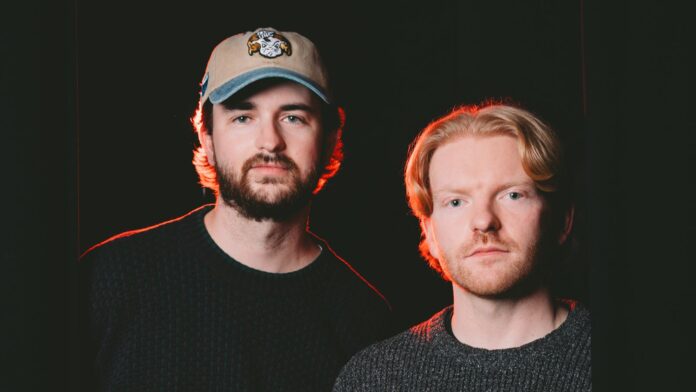
I spoke with directors Kevin Walker and Jack Auen the week before its run this Friday, via Grasshopper Film, begins. Film at Lincoln Center is prefacing it with Bibliomania, a series of films about scholarly pursuits and adventures, which we also discussed.
The Film Stage: At some point, had you thought about commissioning a score, or did you always plan to use Holst’s The Planets as the soundtrack?
Kevin Walker: We never thought about commissioning a score. I think we needed to work faster than that. That would have taken quite a long time and we were trying to meet a couple of deadlines. No shade to any contemporary composers, but it’s hard to do better than Holst did back in the early 20th century. It was copyright-free and it was just such a great fit, so it seemed like the right choice. We picked the best moments from four total recordings to slot into the film for maximum impact.
The first time I saw the film, I thought it was a complete fantasy. The second time, I knew it had a basis in reality. But afterwards, I went on YouTube and searched “Chronovisor,” and I came across dozens of conspiracy theory videos. Do you see yourselves as contributing to a collective project of lore around this?
Jack Auen: We definitely hope so, yeah. When we first discovered the conspiracy for ourselves, we approached it as fans, like anyone would. I’m sure we watched most of those YouTube videos that you’re referring to, anything we could possibly find online. And honestly, our appetites were not sated from just that. That was part of the inspiration to dig a little deeper into the primary sources and try to do our best at pushing the understanding or collating what’s available more than anyone we had seen online has done before.
How do you define the line between looking at a real history and becoming a conspiracy theorist?
Jack Auen: That’s a great question.
Kevin Walker: Yeah, it is a line always being toed by historians, trying to verify the historicity of any given event. To some degree, there’s always an act of faith going on there. And I think conspiracy theories are just maybe a slightly less justifiable version of that act of faith. We didn’t think or talk much about conspiracy when making this film. We were more interested in the device, the possibility of the device itself, than whether or not the conspiratorial aspects of it are true.
Jack Auen: We were thinking about treating the world as if it did exist and how would that impact your desire to want to know more, and just how tempting it is as a device.

Photo by Arin Sang-urai. Courtesy of Film at Lincoln Center.
I even found a YouTube channel purporting to show a film of Jesus’s crucifixion as shot by the Chronovisor. That was obviously done with AI, but that really made me realize just how deep this fascination goes.
Kevin Walker: It’s funny. Those videos always have film grain, dust, and gate weave. I don’t think the Chronovisor had any of that stuff. It’s always in Academy aspect ratio. Clearly this just looks like a movie and not like a Chronovisor. But no: we get a kick out of seeing those online.
It also struck me that in a lot of ways, the film is about being chronically online. But there’s a veneer of scholarship to what Béatrice is doing that makes it look healthier than if she were spending eight hours on her phone watching TikToks. Do you see it as a commentary about the ability to get trapped in rabbit holes?
Jack Auen: As we were making it, I don’t think we saw it as a commentary about anything in particular. It was more just the natural outflow of what it would take to learn more about this device. The materials that are available are all analog. Even as we were finding it, we ran into dead ends pretty quickly on the Internet. Certainly she is living this very isolated, almost monastic but arguably pathological lifestyle all at once. So I think there’s plenty of conclusions for various audience members to draw based on that. But we weren’t thinking about it as a cipher for technology specifically. It was more just the way that the story kind of needed to be told.
How did you approach Anne-Laure Sellier?
Jack Auen: I initially emailed her. She teaches at the HEC in Paris full-time, but she is a visiting professor at the NYU Business School, where I was getting one of my master’s degrees. And I was cold-emailing people with an insane-sounding “do you want to be in a movie about a crazy conspiracy theory?” email. For some reason that we still don’t understand, she entertained it and responded. From there we met with her for coffee. We watched a couple videos of her giving lectures and job talks online, and it was pretty clear she was the perfect fit. So we just got very lucky.
Most films would establish a motivation for Béatrice, like “she really wants to look into the past because her father died when she was young” or “she’s devoutly religious, so that’s why she wants to see images of the crucifixion.” Did you ever think in terms of backstory? It also struck me that this absence allows her to be a stand-in for the audience.
Kevin Walker: I think you’re sort of hitting the nail right on the head there. We discussed it a lot, that very subject: this idea of trauma or an event in someone’s life motivating their every decision in the succeeding years. We see this movie as a fable, something more like the mythology of someone seeking out the Fountain of Youth or the Philosopher’s Stone. And in those stories, the personal biography of the people hunting it down is irrelevant and not germane to why those stories connect with or say something important about humanity. That kind of thing can be a distraction which narrows the interpretive possibilities of your film rather than expands them.
As the film travels around the world, will you have to change the text? Because in the current version, it’s very specifically showing you English on screen, beyond something that could be subtitled.
Kevin Walker: Jack, you saw it subtitled in South Korea, right?
Jack Auen: I did, yeah. To be totally honest, in an ideal world, we would be able to replicate the superimposed text technique localized to whatever country or whatever language is spoken in the country that it’s playing in. We don’t have the money or the resources to do that all ourselves at this point. I was very nervous when I watched it in South Korea, worrying that it would not play as well. And I was pleasantly surprised that the message does get across and it’s not too distracting. But yeah, in an ideal world, we would watch it without subtitles and just with the various techniques that we use in the English version.
How much did you think much about the film’s relationship to genre? On the one hand, it’s very austere and demands that the audience spend half the movie reading. On the other hand, it has a connection to something like The Da Vinci Code or the kind of pulpier movies you’re showing in Bibliomania.
Kevin Walker: The films in Bibliomania are a really great representation of the aspects of genre that we were thinking about when making Chronovisor. Yeah, we knew we were operating within a formal conceit that was potentially very alienating to audiences. And we personally love genre fun and all of its trappings, highbrow and lowbrow. And we thought it’s sort of this… I don’t want to say transaction, but if you stick with us through some of this austere formal stuff, then we’ll give you some of the goods that are exciting about mystery films and sci-fi films and adventure films. It’s this push and pull, or at least a fine balance between these very traditional genre elements that we love and some of the more unconventional formal techniques that we wanted to explore. So hopefully just when an audience is feeling alienated they get pulled right back in.
Were you thinking about the representations of scholars and professors?
Jack Auen: Absolutely, yeah. We have described ourselves as wannabe academics, which is definitely true. We love scholarly characters and books set in academia, like Borges, Eco, The Secret History. All of these things are incredibly tantalizing aesthetically to us. There are many scenes in movies—you know, big movies, small movies, everything from National Treasure to Seven, even Zodiac—that involve looking at documents and staying up late at night in the library with a couple bankers’ lamps. There are a million movies that dip their toes into that side of things, and we just wanted to dive headfirst into the deep end.
Kevin Walker: And I will add, quickly, just that we also are aware that so much of what happens in the film is incredibly unrealistic to the life of a researcher. When Béatrice is literally taking phone calls in the library alone, where is the librarian? Why are all the lights off? We made a lot of unrealistic choices just for fun. It’s been interesting to see real academics sometimes say the film resonates with them, which has been kind of surprising and fun to see.
In relation to Indiana Jones and the Last Crusade, which plays in Bibliomania, it occurred to me that if Indy were a real person, the events of the movies would take up maybe two or three years of his life, and the rest of it would be conventional teaching and research. But those are the parts that those films almost entirely leave out.
Jack Auen: You get the highlight reel of Indy’s life in all of his movies. All you really get is an opening scene where he writes a couple things on a chalkboard and attractive grad students, like, bat their eyelashes at him. That’s all we get about that side of his life. I’m going to steal something that Kevin has said before, which is that we view the act of research and scholarship itself as high adventure in its own right. We don’t need to be hunting for lost idols and running away from falling boulders 24/7 to be entertained and feel that we’re doing something important. So yeah: we definitely see ourselves in conversation with those types of movies.
How many libraries did you shoot in?
Jack Auen: If you count actual libraries, we shot in four. Then there were certain shots of books that were close up enough that we could shoot them elsewhere. But we shot in the Yale Club in New York; the German Society Library in Philadelphia; the Gilman School Library, which is where we went to high school in Baltimore; and then the George Peabody Library at Johns Hopkins University, also in Maryland. So those were our four libraries.
Did you shoot in natural light?
For the vast majority of the film, it was all natural or practical light. That was something that we took a lot of instruction from our cinematographer Leo because neither Kevin or I had directed a film shot on 16mm before. We had produced some that had been shot on film, but this was our first time doing it at a feature-film level. We were doing lots of dark interiors at night. We really put our faith in terms of exposure and lighting in Leo’s hands. We’re very grateful when we got the scans back, and they were not only usable but exactly what we had wanted in terms of atmosphere.
There’s a scene in Béatrice’s apartment where the camera seems to take on a very active role of gazing at her. It suggests a kind of menace that doesn’t actually become an overt part of the film, but seems like an undercurrent. Was that intentional?
Kevin Walker: We definitely wanted a sort of constant sinister undercurrent always, at the base of every scene and modulated throughout the course of the film.
Jack Auen: Sure, yeah. I think I know what scene you’re referring to. It’s not just in Béatrice’s apartment. We do it in several other moments as well where a lot of what is happening on screen could be described as mundane: reading a book, having conversations with colleagues, listening to a vinyl in your apartment. And we were very interested in using other tools of cinema to help add new layers to convince audiences that they should be reading between the lines a little bit beyond just what’s being said or shown onscreen directly. We wanted them to think about how it’s being shown and why we’re choosing to show it in that way. And I think camera movement was definitely one of our big tools there.
If I’m not mistaken, you never see two people speak in the same frame at once. Even when they’re talking to each other, the voices are always off-screen. Is that correct?
Kevin Walker: Limiting the number of actors you see onscreen is a great way to save money. It’s an effect we hoped would contribute to this vague eeriness and unnatural feeling of isolation even within her social moments.

Photo by Arin Sang-urai. Courtesy of Film at Lincoln Center.
In the very first scene at the restaurant, I wondered if I needed to turn the volume up higher to be able to make out the dialogue.
Kevin Walker: Yeah, we’ve heard that quite a bit. We promise it was intentional. We recorded the audio of that scene in a completely silent room. The sounds of the restaurant were added in separately. We mixed it very intentionally that not every word can be made out. That’s also just what it’s like in a New York City restaurant: it is so loud, you can’t hear anything when you’re at a table on a Friday night at a really busy restaurant. So it’s partially also just sonic realism.
There are two books you single out in the credits: The Anatomy of Melancholy and The Memory Palace. What elements from those inspired you?
Kevin Walker: With The Anatomy of Melancholy in particular, we’re fascinated by the character of its author, Robert Burton, who was locked away in a library at Oxford for his whole life. He was the librarian at, I think, it might have been Christ Church College, but I’ll have to double-check that, at Oxford. And he spent his life writing this 1,500-page book about how sad he was and trying to figure out the structure of melancholy and what we might now call depression in the human mind. His isolation and monomaniacal dedication to this academic pursuit has been a continued source of inspiration for us and for Béatrice’s character.
Jack Auen: And then David Bellos’ The Memory Palace is cited more just because we borderline directly quote it in the opening monologue where Béatrice is discussing her work and talking about the technique of a memory palace. We just got a lot of literal textual inspiration. It was just a really big jumping-off point for our thoughts about her work prior to the Chronovisor and why the Chronovisor might be so tempting for someone in her field to try to find.
The film seems very unmoored in both time and place. Although you see street signs in New York after the restaurant scene beginning when Béatrice drives home, it feels like it could take place in Rome or Paris just as easily. And until you see the date on her letter, I wasn’t sure that it was set in the present. Do you see it as a combination of elements from various periods and places?
Jack Auen: Yeah, absolutely. Not with any super-specific intentionality behind it. It’s not even something that we necessarily discussed as we were doing it. It really just is a natural outcropping. Kevin and I were both born in the late 90s. We remember a time pre-Internet quite fondly, but we also have spent most of our time in the modern day. And then we love films from our childhood, the ’90s, the early 2000s, and of course the ’70s, other great eras of American cinema and global cinema as well. It really is the natural alchemy of what we’re interested in aesthetically.
Where do you plan to go from here? Do you have another project planned?
Kevin Walker: We’re in the pre-production and fundraising process right now. It’ll be a little bit bigger scale than Chronovisor and, in broad strokes, it’s a Christmas ghost story again set in New York.
Going forward, do you plan to stick with the reliance on onscreen text?
Jack Auen: You know, we don’t have a hard and fast rule about it. We do still love it. I don’t think that itch has totally been scratched just from this one film. I think there are many more ways to get more inventive and creative with how you can show text on film. The decision to do this in Chronovisor came often for practical and budgetary reasons, and also because of the wealth of actual archival material in text that exists about the device. So it depends on the idea, but we certainly won’t rule it out.
Chronovisor opens in theaters on Friday, September 4 and will expand.
