
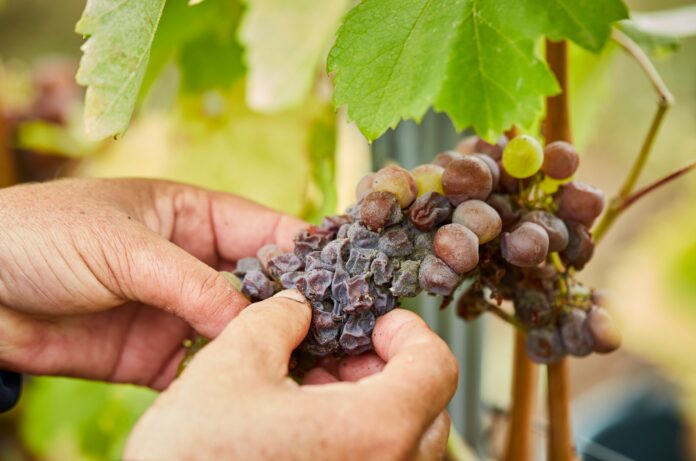
Juicy pineapple, dried mango and marmalade, garnished with sweet spices and camomile, with luscious sweetness always backed by a vivid streak of acidity – these form my impression of Hungary’s noble rot-influenced golden nectar, Tokaji Aszú.
With such a strong character inherent in the style itself, can the nuanced differences in terroir and vintage still work their wonders in the glass?
Royal Tokaji’s single-vineyard aszús provide a fascinating window for discovery.
What shapes the flavours of aszú
Co-founded in 1990 by bestselling wine author and Decanter Hall of Fame winner Hugh Johnson, Royal Tokaji takes a single-vineyard-focused approach to producing its dry white and aszú ranges.
The upcoming release of Royal Tokaji’s signature single-vineyard aszús will be from the 2019 vintage, sourced from the estate’s own plots within Birsalmás, Nyulászó, Szt. Tamás, Betsek and Mézes Mály in the commune of Mád.
Although the estate has produced single-vineyard aszús since the 1990s, releases have not always been consecutive.
The 2019 follows an unbroken run from 2016, through 2017 and 2018 (with the exception of Birsalmás, due to replanting).
Get our daily fine wine reviews, latest wine ratings, news and travel guides delivered straight to your inbox.
I was fortunate enough to taste all four recent vintages of the set pre-release, each time finding myself fascinated by the diverse expressions of each plot – ranging from mineral and lifted to pure and luscious, complex and profound – while my preferences varied hugely between vintages.
The ripeness and health of the fruit and the timing of noble rot (botrytis) infection, combined with Tokaj’s choice of grape varieties (principally the late-ripening, high-acid Furmint), cool continental climate, complex volcanic soils and distinctive winemaking methods, are key factors shaping the flavour profiles of these glamorously sweet yet vibrant dessert wines, as Caroline Gilby MW explains in her Tokaji Aszú vintage guide.
The 2019 vintage

Aszú harvest at Royal Tokaji
(Image credit: Royal Tokaji)
The year 2019 saw a cool spring before Tokaj embraced a hot summer, with temperatures regularly reaching 35˚C and setting the course for an early-ripening vintage.
Following a dry August, ‘we were hopeless at the beginning of September as there wasn’t a sign of aszú,’ said winery director Zoltán Kovács.
Thankfully, rain in mid-September, combined with high temperatures, triggered the rapid onset and spread of botrytis.
Although rain towards the end of October shortened the picking window, Royal Tokaji reported picking ‘rich and clean’ fruit for its single-vineyard aszús, starting with its plots in Nyulászó and finishing with Szt. Tamás.
The aszú winemaking

Zoltán Kovács, winery director of Royal Tokaji
(Image credit: Royal Tokaji)
Traditionally, the shrivelled aszú berries are macerated in a base of grape must, fermenting must or young wine to extract the botrytis flavours and sugars.
At Royal Tokaji, the base wine is fermented to 5%-6% alcohol before the aszú berries are added to the still-fermenting must for two days of maceration.
After pressing comes a more distinctive step for Royal Tokaji’s single-vineyard aszús: fermentation is completed in Hungarian oak (30% new for the 2019).
The method was adopted in 2017, the year Zoltán Kovács joined the estate, with the aim of adding greater complexity and depth.
The aszús are then aged on fine lees in 300- and 500-litre barrels made from oak sourced from the Zemplén Hills.
The same vinification and ageing process is applied across Royal Tokaji’s single-vineyard aszús, allowing the differences between the sites to come into focus.
The highlights

(Image credit: Royal Tokaji)
My top pick among the 2019s has been the Nyulászó (meaning ‘a good place to catch hares’) – a site featuring volcanic bedrock topped with brown clay and rhyolite tuff.
Its layered complexity and elegant dried-floral characters go hand in hand with a seamless mouthfeel, driven by limpid acidity and finishing long and lingering – a bottle you can slowly savour through, favourite book in hand, to the last drop.
The neighbouring Szt. Tamás brought a more vinous, dried fruit-driven aroma to the glass, although the palate would surprise you with its zesty freshness.
For spiciness and a touch of herbal freshness, backed by splendid purity of fruit, opt for the Betsek from the Mád basin, which has the lowest alcohol among the 2019 single-vineyard bottlings.
A warming globe vs the aszú style
With extreme heatwaves sweeping across the European continent and Hungary reaching a record high of 42°C this summer, the 2026 harvest will be an ‘interesting study’ for aszú production due to the high temperatures and lack of humidity so far, said Charlie Mount, Managing Director of Royal Tokaji.
But the arrival of autumn rain may still completely change the situation, said Kovács, reflecting on similar situations in 2019 and 2025.
‘In Tokaji during harvest time, [for making sweet wines] you don’t need to be in a hurry, just wait for the right time.’
For dry wines, this year’s heat spells have shown that the estate’s plantings in the lower parts of the single vineyards, or on east- and northeast-facing plots, tend to be better shielded from sunburn.
Kovács doesn’t see the need for immediate operational changes at Royal Tokaji to cope with the warming temperatures, however.
‘We just have to react, using the resources we have, to what nature gives us.’
