
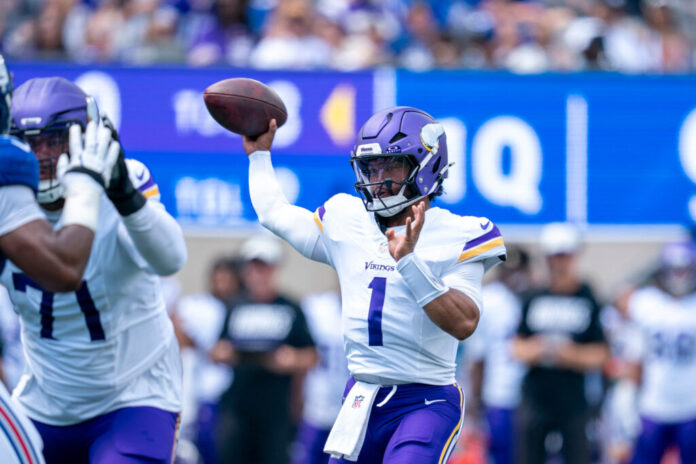
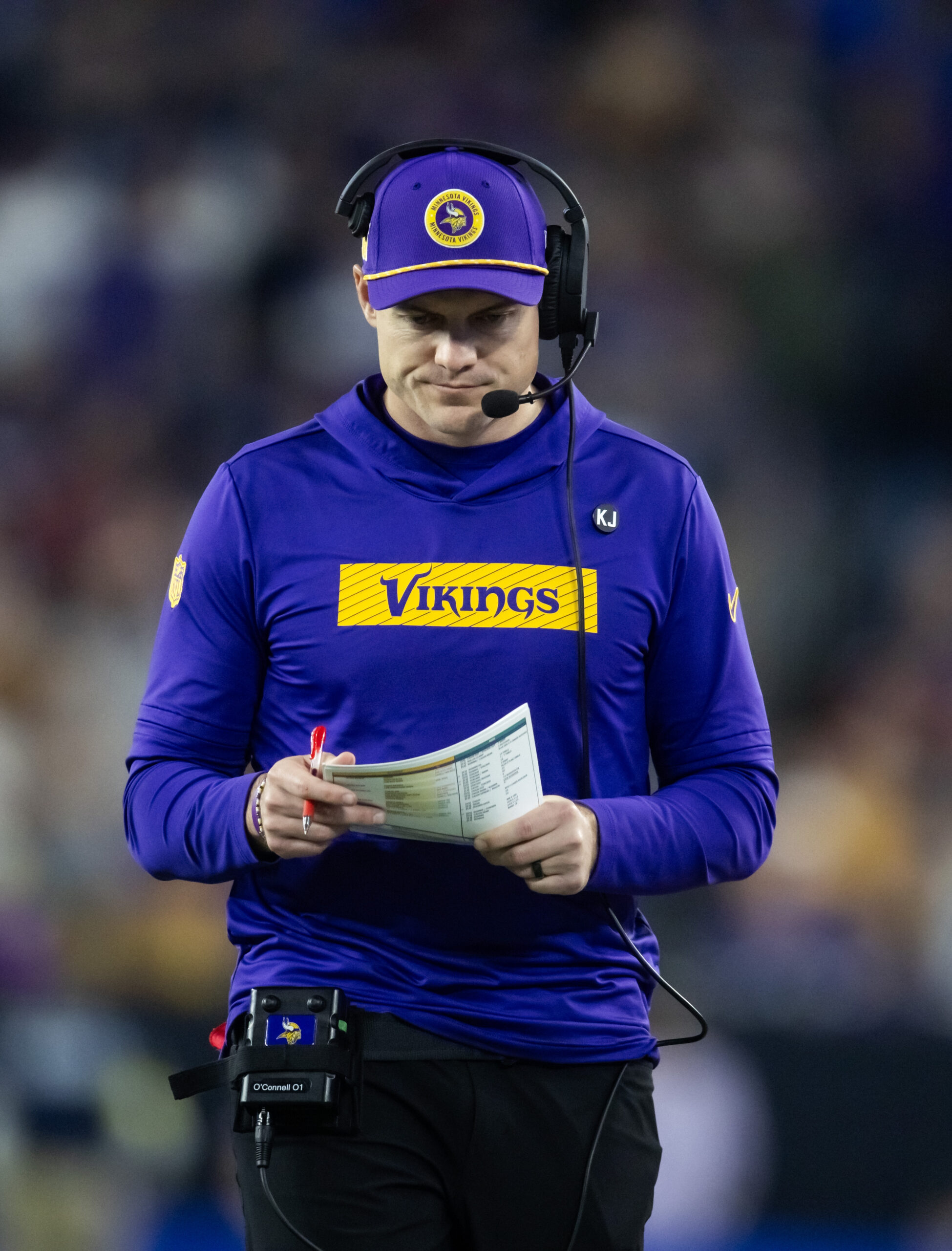
Although the Vikings’ express quarterback competition received more attention, the team’s offseason featured an atypical GM search. A year after extending Kwesi Adofo-Mensah, the Vikings booted the four-year front office boss. They then waited months to identify his successor, putting the draft in the hands of an interim leader (with a heavy role from Kevin O’Connell). Nolan Teasley’s arrival represents the Vikes’ top big-picture development from this offseason, but Kyler Murray naturally is the near-term headliner.
A Vikings fan growing up, Murray wore out his welcome in Arizona. Minnesota quickly became the favorite to sign the two-time Pro Bowler, and he will operate as one of the NFL’s biggest 2026 X-factors. O’Connell managed a 9-8 record with abysmal quarterback play last season. While the future of J.J. McCarthy is very much in doubt, the Vikings have an interesting setup around Murray as O’Connell begins his fifth season in charge.
Coaching/front office:
Adam La Rose’s Vikings Offseason Outlook covered the franchise’s decision to boot Adofo-Mensah. That decision came at an unusual time — January 30. Even the Jaguars’ about-face on Trent Baalke — after it was clear his presence was hindering their coaching search — came earlier (Jan. 22, 2025). Unlike the Jags, the Vikings regrouped and went without a GM for four months.
 This situation differed from the NFL’s most recent post-draft GM hire (the Steelers’ Omar Khan in 2022), as Khan was moving up the ladder within the organization, and the Chiefs’ 2017 Brett Veach promotion. Even the Panthers’ Dave Gettleman firing in July 2017 led Marty Hurney back to the organization. Doug Whaley’s April 2017 Buffalo ouster came after a new head coach hire; ditto the Jets’ May 2019 Mike Maccagnan boot. This Vikings decision is an outlier in modern NFL history.
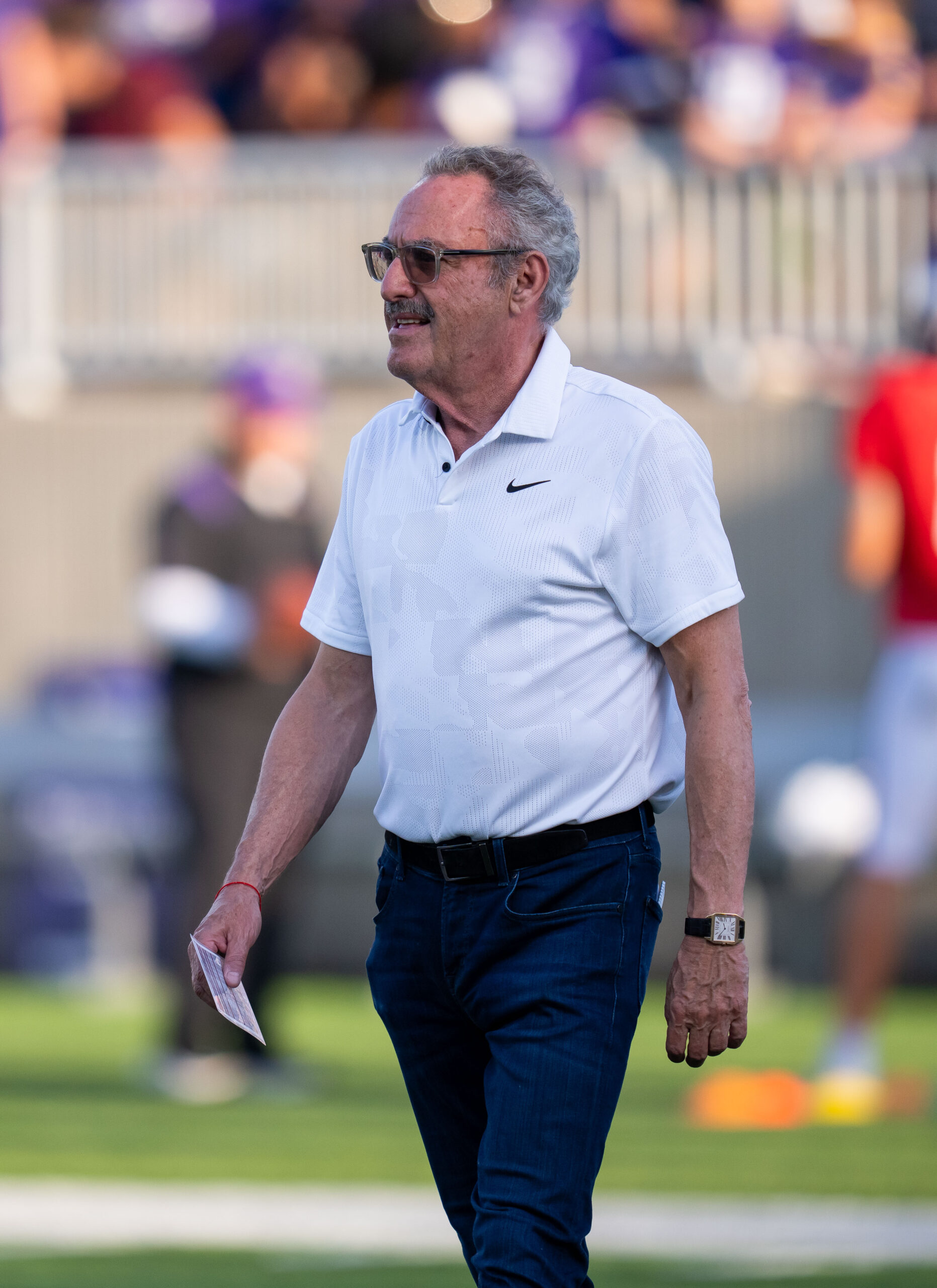
An NFL staffer since beginning his career during Don Shula’s final years in Miami, Brzezinski has been with the Vikings since 1999. He moved into the executive VP of football ops in 2014 and was a finalist for the GM job. The Vikings ended up canvassing the league’s assistant GM ranks, eventually settling on four AGMs as finalists (Teasley, the Broncos’ Reed Burckhardt, the Bills’ Terrance Gray and the Rams’ John McKay) joining Brzezinski.
The Broncos and Bills had lost AGMs (Darren Mougey, Joe Schoen) to AFC East GM posts this decade, while Rams staffers — including current Jags GM James Gladstone — are continually plucked from the front office and sideline. Following the Seahawks’ NFC championship win over the Rams and dominant Super Bowl LX win, Teasley booked the gig.
A Washington native who attended Division II Central Washington, Teasley caught on with the local NFL team at a rather notable time. GM John Schneider added Teasley to the scouting staff in 2014, and he stayed on for the Legion of Boom and Russell Wilson years and was in the top lieutenant seat when the 2024 Pete Carroll firing gave Schneider full autonomy. Teasley was not in the AGM chair when the Seahawks foisted Wilson on the Broncos and rebuilt their roster, but he did rise to that level ahead of an impactful 2023 Seattle draft.
 The Wilson trade produced four draft hits from 2022-23 (Charles Cross, Boye Mafe, Devon Witherspoon, Derick Hall), and the ’23 first round supplied the Seahawks with Witherspoon and Jaxon Smith-Njigba. Seattle then drafted ascending defensive tackle Byron Murphy in the 2024 first round, doing so after trading for Leonard Williams. The latter move paid off as well, as the Seahawks were able to re-sign the standout interior D-lineman in 2024.
Teasley was also on the job for the second Seattle 2020s QB foisting, as the team made the prescient Geno Smith-for-Sam Darnold switch by trading the three-year starter to Carroll’s Raiders despite not having an immediate solution. The Darnold bet worked magnificently.
After the Hawks edged the Rams and stampeded past the Patriots — as Schneider became the first GM in the Super Bowl era to build two entirely different championship rosters, as no one from the 2013 team was still around by 2025 — the Vikings gave Teasley the job. Teasley now runs the team that let Darnold walk in free agency while attempting to build around McCarthy.
O’Connell joined Adofo-Mensah in signing a long-term extension last year, and he will wield considerable say. But Teasley will control the Vikes’ 53-man roster. It may be a bit before the team feels like his, though, as the only major move Teasley has made was the summer Brian O’Neill extension. Brzezinski and O’Connell took care of the rest.
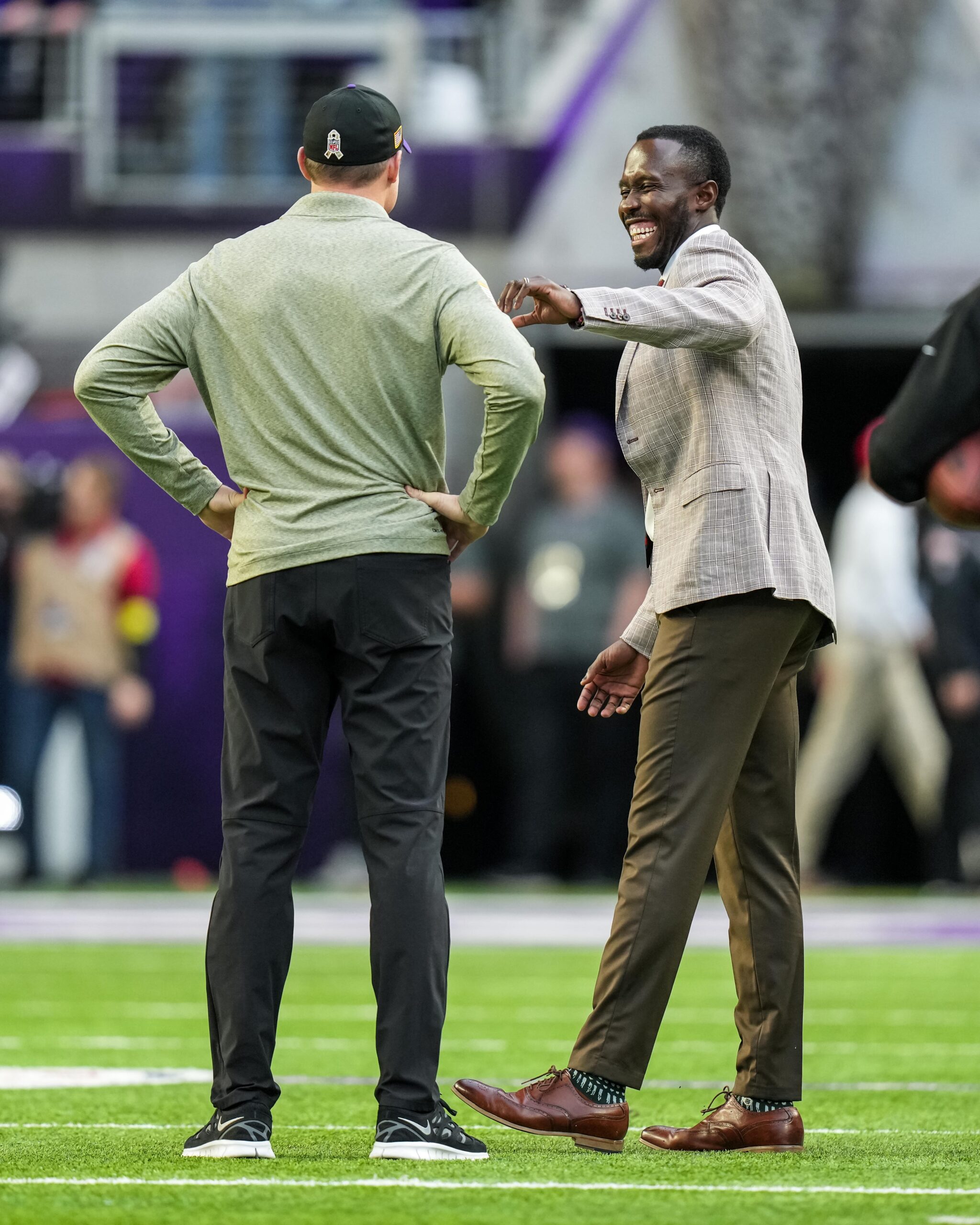 Kirchner had also interviewed for GM jobs in the past and, unlike Teasley, was part of both Super Bowl-winning Seahawks squads. Schneider and Carroll hired Kirchner from the Panthers in 2010, bringing him in from the start of that regime change. Kirchner moved up to VP of player personnel in 2020, and his hire provides a sturdy Seahawks tree branch forming in the Twin Cities.
Kirchner’s 25-plus-year NFL tenure complements his AGM counterpart well, as Healy is in Year 11. Prior to joining the Sashi Brown– and Paul DePodesta-led Browns rebuild experiment in 2016, Healy spent 11 years as an economics professor at Loyola Marymount.
Hiring an Ivy League-educated (Yale) Browns staffer as a co-lieutenant is a rather interesting move, considering Adofo-Mensah (Princeton) was added from Cleveland and came up through the strategy-side ranks. Healy and Adofo-Mensah worked together under Brown and DePodesta from 2020-21. How Healy works with the longtime Seahawks coworkers will be something to follow as Teasley puts his stamp on the franchise.
Adofo-Mensah was believed to be safe after meeting with ownership in mid-January, and after going 2-for-4 in playoff berths at the helm in Minnesota (including a 14-3 season with Darnold in 2024), he joined the 49ers as their VP of football personnel and strategy.
Trades:
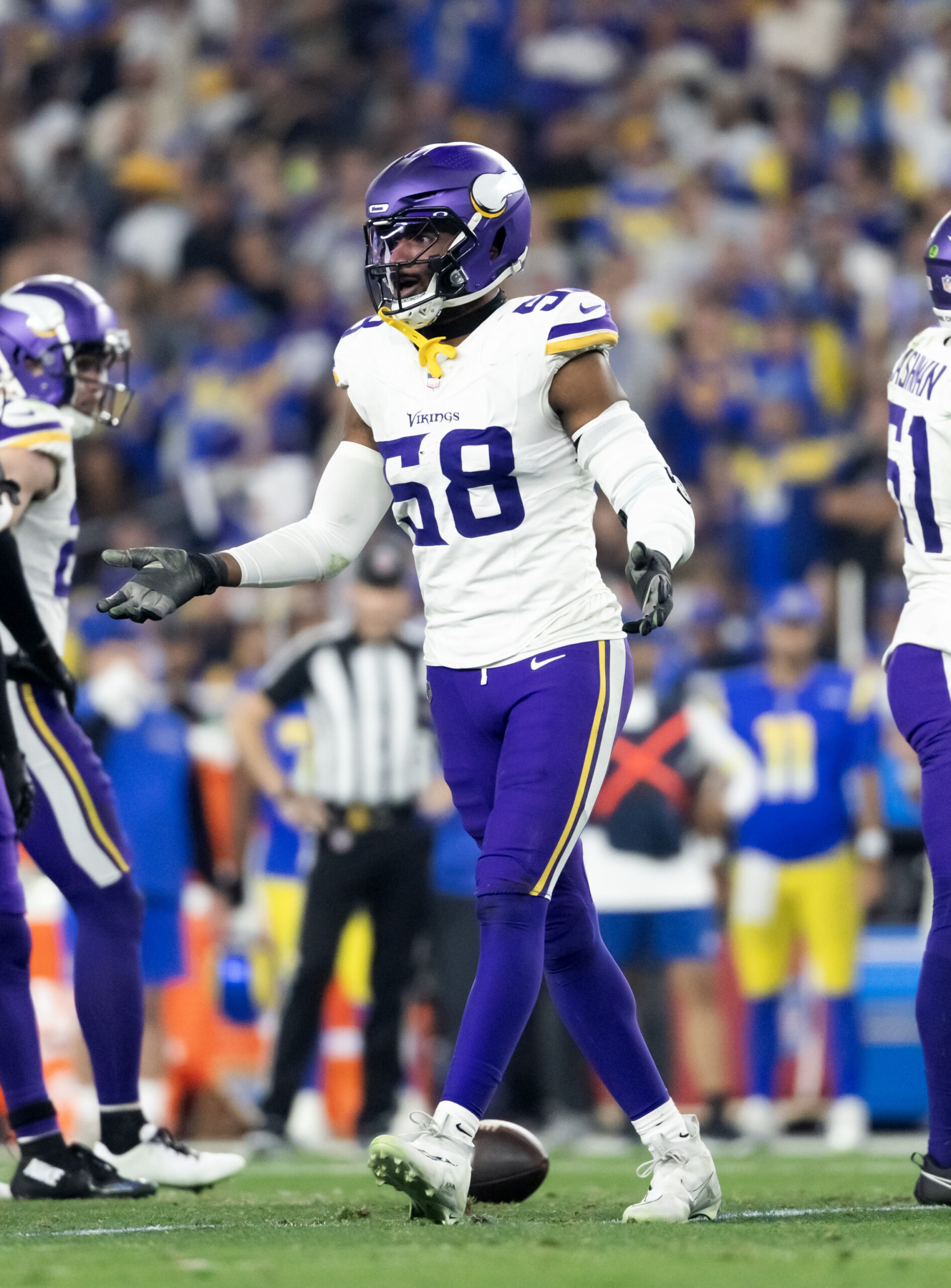 Losing Danielle Hunter in 2024, the Vikings revamped their edge rush by signing both Greenard and Andrew Van Ginkel before using a first-round pick on Dallas Turner. Greenard and Van Ginkel became the rare EDGE duo to be named Pro Bowl starters together.
That duo’s 2024 success, which included a subsequent raise for Van Ginkel, perhaps came as a bit surprising for a Vikes team that traded up to No. 17 overall to draft Turner. Minnesota used Greenard and Van Ginkel as its starters for the past two seasons, with Turner only receiving an extended look due to 2025 Greenard and Van Ginkel injuries (each missed five games last season).
Despite Greenard’s mid-2020s momentum stalling last season due to his health, he was seeking a raise. The Vikings had given the ex-Texans third-rounder a four-year, $76MM deal during the 2024 free agency period. The market looked dramatically different ahead of Greenard’s second Minnesota season.
The ’25 offseason brought a transformation on the EDGE market, as many of the game’s best rushers — Hunter included — signed new contracts. The EDGE ceiling when from Nick Bosa’s $34MM-per-year deal (agreed to in 2023) to $46.5MM AAV (Micah Parsons) in less than six months in 2025. Greenard’s former Houston teammate, Will Anderson Jr., then became the NFL’s first $50MM-per-year defender by inking an extension in mid-April of this year.
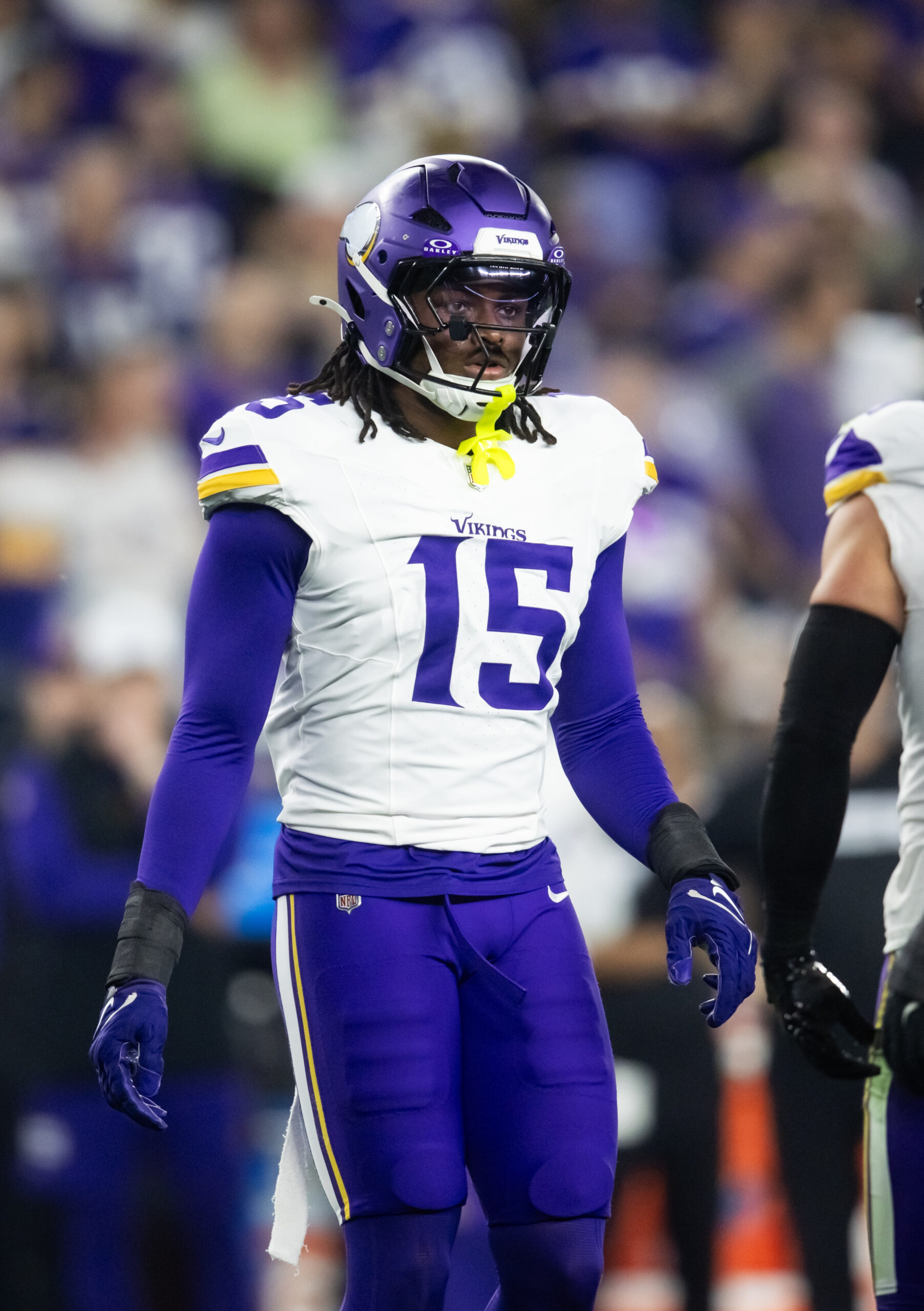 When asked in early April whether the Vikings planned to retain Greenard, O’Connell responded in the affirmative. But the modern NFL has featured numerous instances of such answers preceding trades. The Vikes and Eagles had discussed Greenard a month prior, though Minnesota was aiming for a second-round pick Philly was unwilling to provide. But the sides reached a draft-weekend compromise.
The Eagles ponied up two third-round picks, and that proved sufficient for the Vikings. Brzezinski said shortly after the trade he did not view a new Greenard deal as feasible. Greenard (24.5 sacks from 2023-24) had played out the guarantees on his four-year pact, and the Eagles missing on Trey Hendrickson led to Greenard being rewarded on the heels of a down season.
He signed a two-year, $60MM Eagles extension ($50MM fully guaranteed). Greenard’s Philadelphia pact goes through 2029. Minnesota has Van Ginkel signed for just one more season, while the team can keep Turner on his rookie deal through 2028 (should his fifth-year option be exercised by May 2027). Turner, 23, produced eight sacks and 15 QB hits last season; that marked a substantial improvement from 2024. The ex-Anderson Alabama teammate looks like the Vikings’ centerpiece player on the edge now, as Van Ginkel is heading into an age-31 season.
Free agency additions:
- Jauan Jennings, WR. One year, $8MM ($6.13MM guaranteed)
- Ryan Van Demark, T. One year, $4.27MM RFA offer sheet ($4.15MM guaranteed)
- James Pierre, CB. Two years, $8.5MM ($3.72MM guaranteed)
- Jamal Adams, LB. One year, $1.41MM ($60K guaranteed)
- Kyler Murray, QB. One year, $1.3MM
- Kyle Van Noy, OLB. Signed 9/1
Murray’s summer 2022 Cardinals extension effectively sank the Steve Keim-Kliff Kingsbury regime — months after both received extensions. Reports of the infamous “homework clause” in the scrutinized passer’s contract emerged soon after the ink dried, and as the heat intensified, the Cards removed it. Murray’s Arizona career trended downward from there.
 The two-time original-ballot Pro Bowler was not playing at a Pro Bowl level during the 2022 season, which ended with an ACL tear, but the five-year, $230.1MM extension brought important protection. A rebuilding Cardinals team held Murray out until Week 10 of the 2023 season, and he did rebound in 2024, finishing ninth in QBR.
The Cards’ Monti Ossenfort-Jonathan Gannon regime continued to praise the quarterback, and they kept him on the roster on March 17, 2025, locking in his 2026 compensation. Murray’s 2026 salary ($22.84MM) shifted to fully guaranteed, and $10MM of his $17MM roster bonus locked in as well. The Cardinals regretted this.
A mid-foot sprain derailed Murray last year, but it looked for a bit like the 5-foot-10 QB would return. Instead, Gannon and Ossenfort comments made it seem like Jacoby Brissett would remain the starter regardless of Murray’s health (despite Arizona’s season nosediving at that point); the team then placed Murray on IR and shut him down. No real trade market formed, and Murray-Minnesota connections picked up steam.
Although the Broncos took on a then-record-smashing $84MM-plus in dead money to drop Russell Wilson in 2024, 2026 became the year of the QB sunk cost. The Cardinals’ troubles do not compare to those afflicting the Dolphins, who took on a now-record $99.2MM single-player hit by designating Tua Tagovailoa a post-June 1 cut. The Cardinals did the same with Murray, but they “only” absorbed a $53.8MM dead cap blow. Murray and Tagovailoa followed Wilson’s 2024 path in signing veteran-minimum deals.
Murray stuck the Cardinals with most of the bill by joining the Vikings — the clubhouse leader for the former Heisman winner’s services this offseason — for $1.3MM. While both he and Tagovailoa landed in situations teeming with skill-position talent, Murray looks to be in a much more stable spot. He correctly calculated a smooth path to the starting lineup existed, as Tagovailoa has struggled in a competition that for months featured only one healthy option. Murray and McCarthy technically competed, but O’Connell declared a winner before the preseason, representing a historically early win in a QB battle.
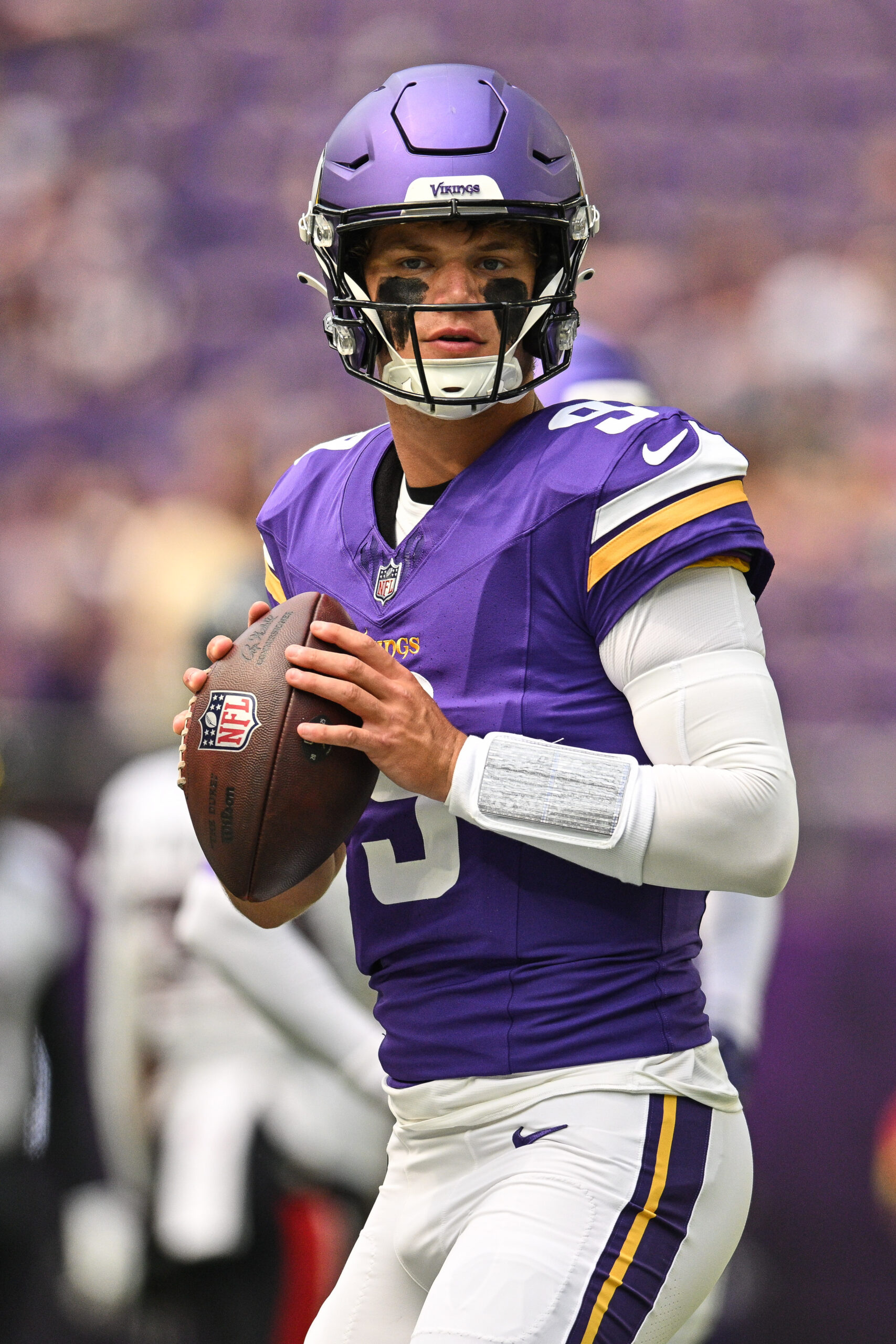 O’Connell named Murray the starter August 11. McCarthy may have earned another chance were the Vikings on a rebuilding trajectory, but because the former No. 10 overall pick struggled so badly on a team with a veteran-filled roster that played a Week 18 game for home-field advantage barely 18 months ago, the Vikings demoted him.
The tension in the building surrounding Adofo-Mensah did not do McCarthy any favors, as he went from a handpicked quarterback — the Vikings traded up one spot (via the Jets) to nab him at 10, passing on Bo Nix — to a player who suffered a season-nullifying injury and watched Darnold guide the Vikes to their most wins (14) since the stratospheric 1998 season. The national championship-winning Michigan prospect is now in limbo, but in O’Connell’s defense, the early returns were alarming.
McCarthy played so poorly in Week 2 of last season that the Vikings seemed to slow-play his return from a high ankle sprain. McCarthy was dressed for a Week 8 game that featured a badly injured Carson Wentz playing against the Chargers. Wentz landed on IR, moving McCarthy back into action.
McCarthy finished season with a 57.6% completion rate, an 11:12 TD-INT ratio and a paltry 5.4 yards per attempt. Rumblings about McCarthy facing immediate competition surfaced before last season ended, and rather than a Nick Foles-like figure — the Bears’ competition for the embattled Mitchell Trubisky in 2020 — Murray arrived as a midlevel starter and was long believed to hold a clear edge in the QB matchup.
While giving McCarthy only 10 starts seems a bit unfair, the rookie-scale contract era rarely brings extended developmental arcs past NFL periods did. McCarthy being done as a starter in Minnesota would be closer to a true Paxton Lynch– or Johnny Manziel-like faceplant rather than the mid-contract benching for Zach Wilson. But with word circulating soon after Murray beat out McCarthy that the latter may be QB3 behind Wentz, the Vikings appear done with the potential bust.
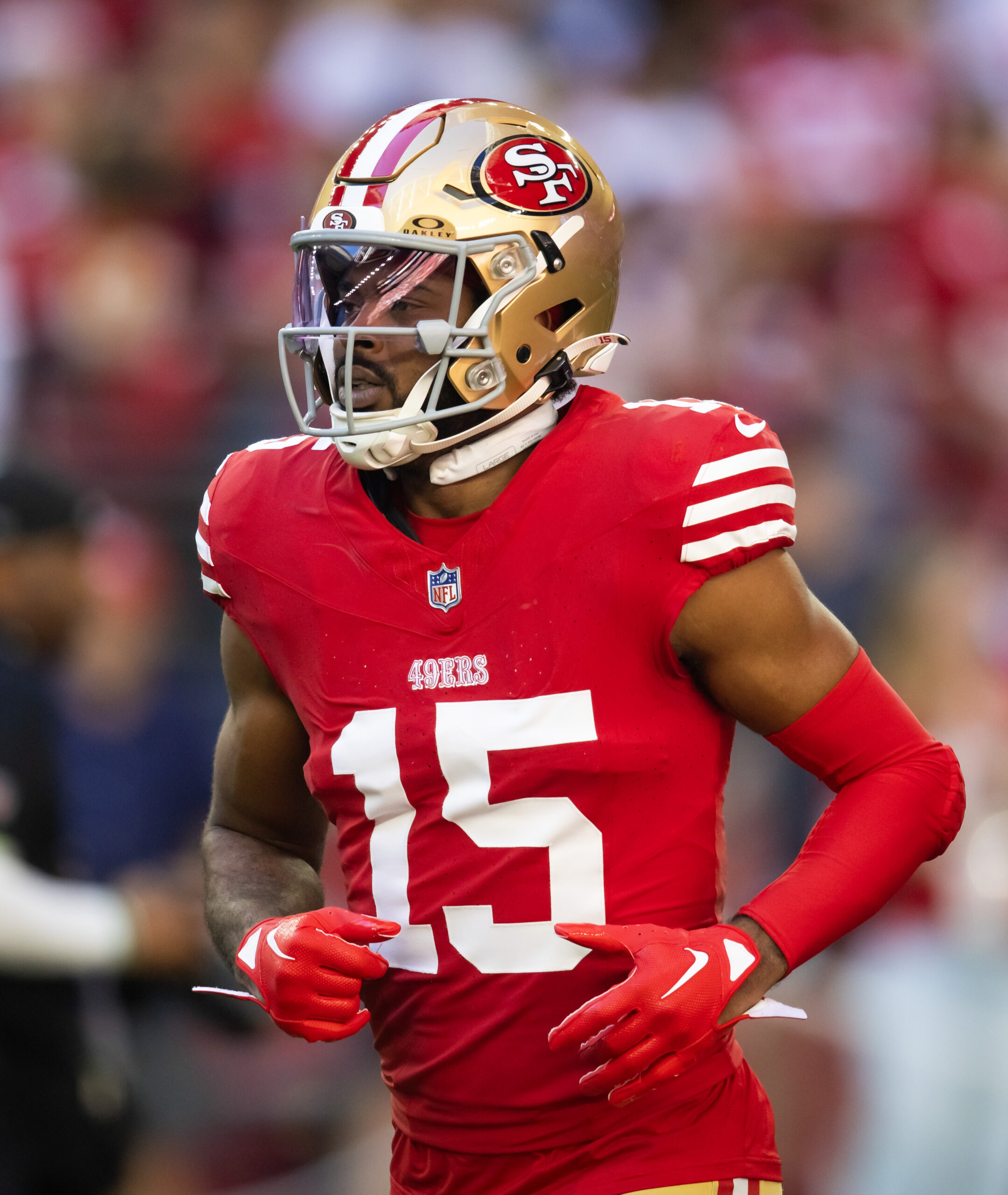 The Vikings going 9-8 with McCarthy, Wentz and Max Brosmer at the helm can be viewed as credit to O’Connell and recently extended DC Brian Flores, and Murray stands to be a significant upgrade. Save for some moments in 2024, however, Murray has not shown himself to be an upper-crust option since 2021. Though, this should be the best situation the 29-year-old passer has been in since his final Oklahoma season.
This would be a borderline remarkable resurgence, and his skillset differs drastically from the Sean McVay/Kyle Shanahan/O’Connell-ian QB archetype. But the Vikes will give this a shot; they will arm Murray with a quality pass-catching armada — headlined by Justin Jefferson, Jordan Addison and T.J. Hockenson — as plenty will be on the line for the former No. 1 pick.
Murray could transform his 2027 market in Daniel Jones-like fashion with a bounce-back year under O’Connell, and we have seen QBs with improved circumstances — look no further than Darnold’s arc — cash in after recoveries. It is certainly not farfetched for Murray to follow suit.
Minnesota nabbed a solid No. 3 option alongside Jefferson and Addison as well. Jennings’ market did not underwhelm the way Rasheed Walker’s did, but PFR’s No. 18-ranked free agent may have overplayed his hand. Jennings was believed to have set his asking price too high for suitors. The 49ers were in talks with the auxiliary wideout — a player who helped keep the team’s battered pass-catching array afloat last season — before free agency, but they pivoted to other options (Mike Evans, Christian Kirk and second-rounder De’Zhaun Stribling). A Minnesota visit in early June provided a parachute for Jennings.
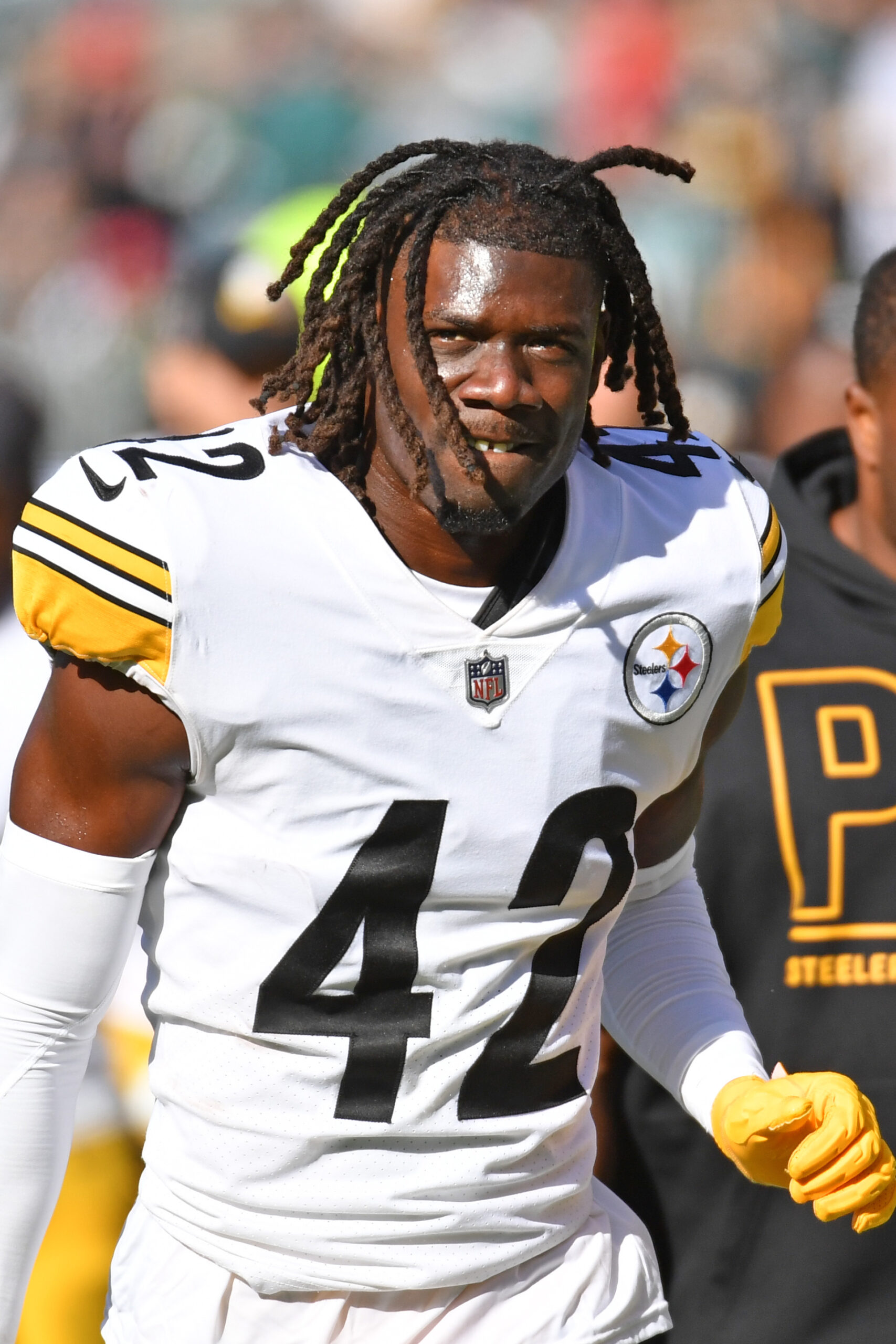 The high-end blocking wideout carried momentum into a pivotal free agency period. Despite being just 29, the former Deebo Samuel/Brandon Aiyuk supporting-caster did not command the type of market most (myself included) anticipated. Jennings filled in well for the injured Aiyuk in 2024, accumulating 975 receiving yards. This preceded the former seventh-round pick asking for a raise (and landing only incentives). Jennings totaled 643 yards last season, one that featured Brock Purdy missing extensive time, but scored a career-high nine touchdowns.
Jennings may be overqualified for his current role; the seventh-year vet would be a No. 2 wideout for some teams. He will try to boost his 2027 market through a role in O’Connell’s offense.
Pro Football Focus ranked Pierre second among all cornerbacks last season, albeit on 408 defensive snaps. Teams regularly disagree with PFF’s assessments, but Pierre did secure a raise after being tied to minimum-level money for most of his Steelers career. Pierre, 30 this month, looks set to work as a boundary corner in nickel packages — when Byron Murphy shifts to the slot. This will be a big test for a player who has just 13 starts in six seasons.
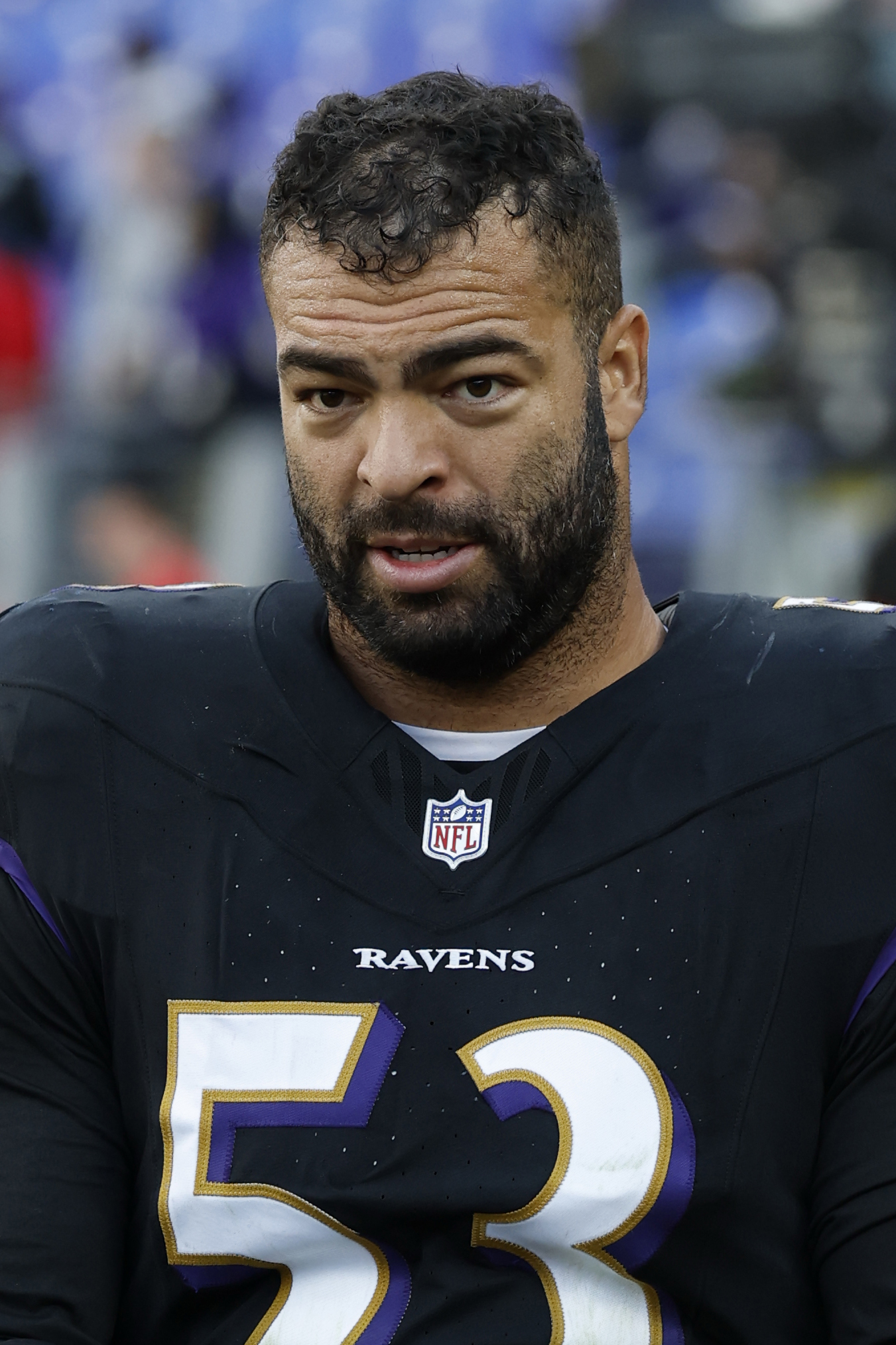 An early-summer rumor pointed to the Vikings being in the EDGE market post-Greenard, and with two UDFAs (Bo Richter, Chaz Chambliss). Van Noy, 35, reached a September agreement to reunite with Flores — who coached him in New England and Miami.
Van Noy profiles as a No. 3 rusher at this stage of his career and one coming off a two-sack season in 15 games — during a season limited by a hamstring injury. However, Van Noy — who resurrected his career upon being traded to the Patriots in 2016 — combined for 21.5 sacks in Baltimore from 2023-24. A hybrid linebacker for much of his career, Van Noy has settled in as an edge defender. He also has a history of producing without much (or any) offseason reps. The Ravens signed Van Noy in late September 2023 and watched him post nine sacks for Mike Macdonald’s No. 1 defense.
Van Noy played for Flores from 2016-18 and then in Miami in 2020. During that time, he racked up 21.5 sacks — including three in the Pats’ three playoff games en route to a Super Bowl LIII title. The Vikings have two clear-cut starters, but Van Noy could be a solid stopgap OLB3. This position figures to be a need area in 2027, though.
Re-signings:
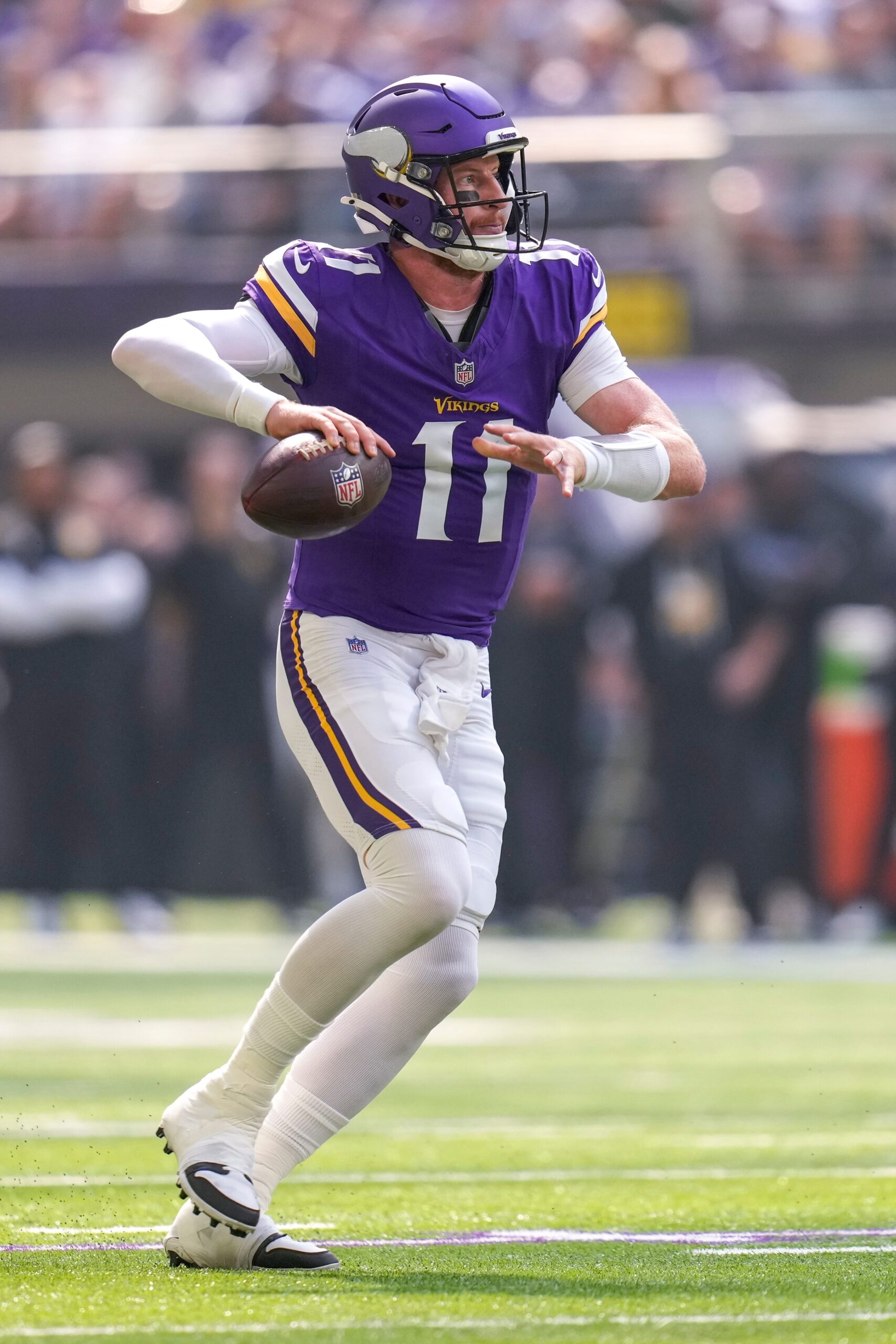 Starting for a sixth team in six seasons, Wentz has not had the career expected of a No. 2 overall pick. But the North Dakota State product is still going in Year 11. This will be his first time on the same team in consecutive years since his Eagles chapter. Considering McCarthy’s status, the Vikings giving Wentz a $2.65MM guarantee looked interesting. The Wentz re-signing occurred more than a week after Murray’s commitment, signaling a potential hedge on McCarthy being suitable even for the backup chair.
Wentz, 33, ran his start count to 99 last season. He did so despite suffering a torn left shoulder labrum and a fractured socket, playing through those injuries for two-plus games. By the time Wentz faced the Chargers in Week 8, it was clear he was playing through significant pain. Completing 65.2% of his passes at 7.2 yards per throw, Wentz outplayed McCarthy despite the injuries.
With the Vikes bringing Max Brosmer back on a practice squad deal, a door would seem to be open for a McCarthy trade. With McCarthy’s fifth-year option set to be declined — by the Vikings or another team — in 2027, this is one of the more fascinating freefalls in recent NFL annals.
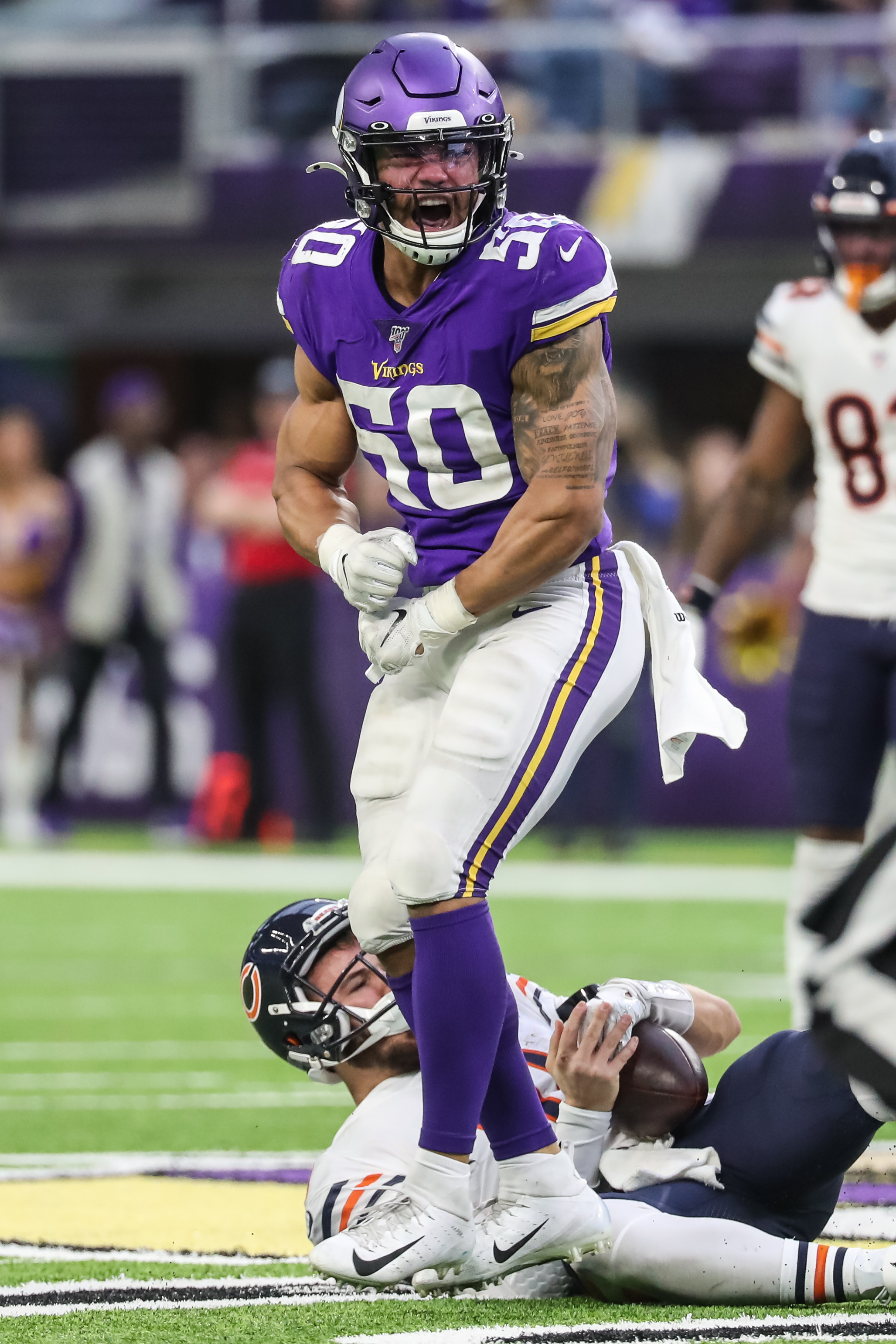 Conversely, Wilson has crafted an under-the-radar rebound. A 15-game starter in his 2020 contract year in Mike Zimmer’s defense, Wilson had been unable to command much of a market in a few free agency tries. His $2.75MM Eagles deal in 2021 represented his high-water mark in that span, as a host of low-end contracts — from the Saints and Packers — preceded a return to Minnesota in 2025. The veteran linebacker capitalized on the second chance.
Wilson’s 965 defensive snaps last season were by far his most since that 2020 slate, when the Vikes had him on a second-round RFA tender. Minnesota used the former UDFA alongside Blake Cashman as its primary linebacking duo last season. Wilson replaced an injured Cashman after Week 1 but kept the job when the regular starter returned, reducing Ivan Pace‘s role. Flores’ linebacking corps will feature three 30-something starters, with Van Ginkel and Wilson 31 and Cashman 30.
Notable losses:
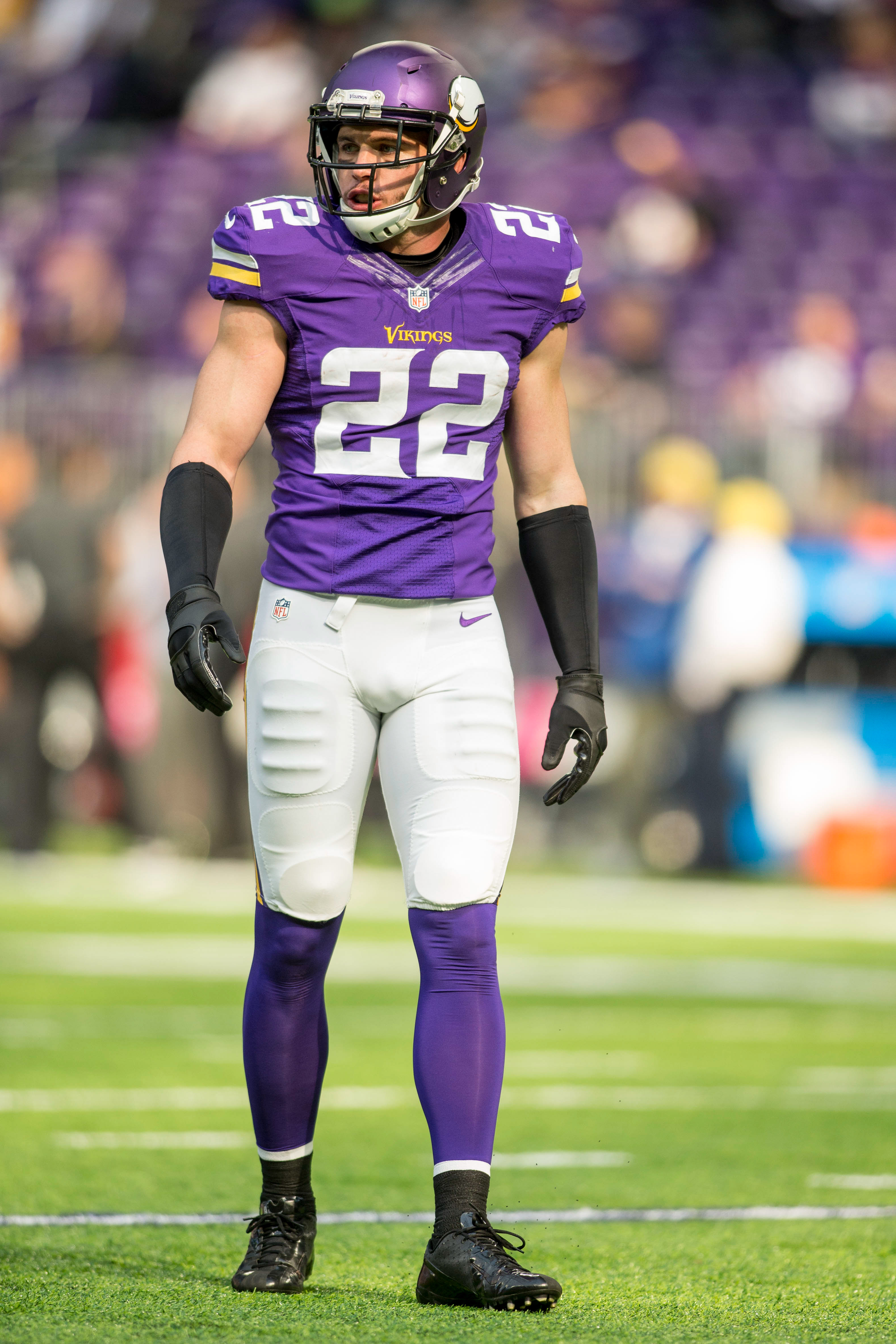 A 14-year Viking, Smith ranks third all time for games played by a Minnesota defender. At 207 Vikes games, Smith is two away from the second-longest-tenured Purple People Eater (Carl Eller); it seems next to impossible anyone will catch ironman DE Jim Marshall (270). Adofo-Mensah reworked Smith contract so he became a post-June 1 cut; the deal would have voided March 13.
Earning six Pro Bowl honors and being twice named All-Pro (2017-18), Smith is one of the best players in Vikings history. The 2012 first-round pick arrived during Leslie Frazier’s HC tenure, did his best work under Zimmer and remained effective into his mid-30s in Flores’ defense. When last season ended, Smith’s 39 interceptions were the most among active players.
PFF ranked Smith 33rd among safeties last season, and the Vikings have remained open to bringing him back. It seemed the door was nearly closed on this once training camp wrapped, but O’Connell said last week he had stayed in touch with the accomplished DB. Should this be it for Smith, he will be remembered as one of his era’s best safeties — just as Joey Browner and NFL INT kingpin Paul Krause were in theirs.
Allen and Hargrave arrived in Minnesota as cap casualties, and both DTs left the Twin Cities as cap cuts. Each landed on his feet, however, illustrating this free agent D-tackle market’s lack of depth. Our top 50 free agents list included only one interior D-lineman (John Franklin-Myers), but once Allen and Hargrave became available as street FAs, markets awaited. Allen signed a two-year, $25MM Bengals deal ($10.5MM guaranteed at signing), while Hargrave reunited with ex-Eagles DC Jonathan Gannon in Green Bay (two years, $23MM; $10.5MM at signing).
Allen is on the Vikes’ 2026 payroll at $12.67MM, Hargrave at $10.5MM. The Vikings took on all of the Hargrave dead money this year, but by designating Allen a post-June 1 cut, the team will see him count $4.7MM against its 2027 cap sheet. Adofo-Mensah’s Smith reworkings will lead to dead cap hits of $3.53MM (2026) and $7.6MM (2027) regardless of whether he re-signs.
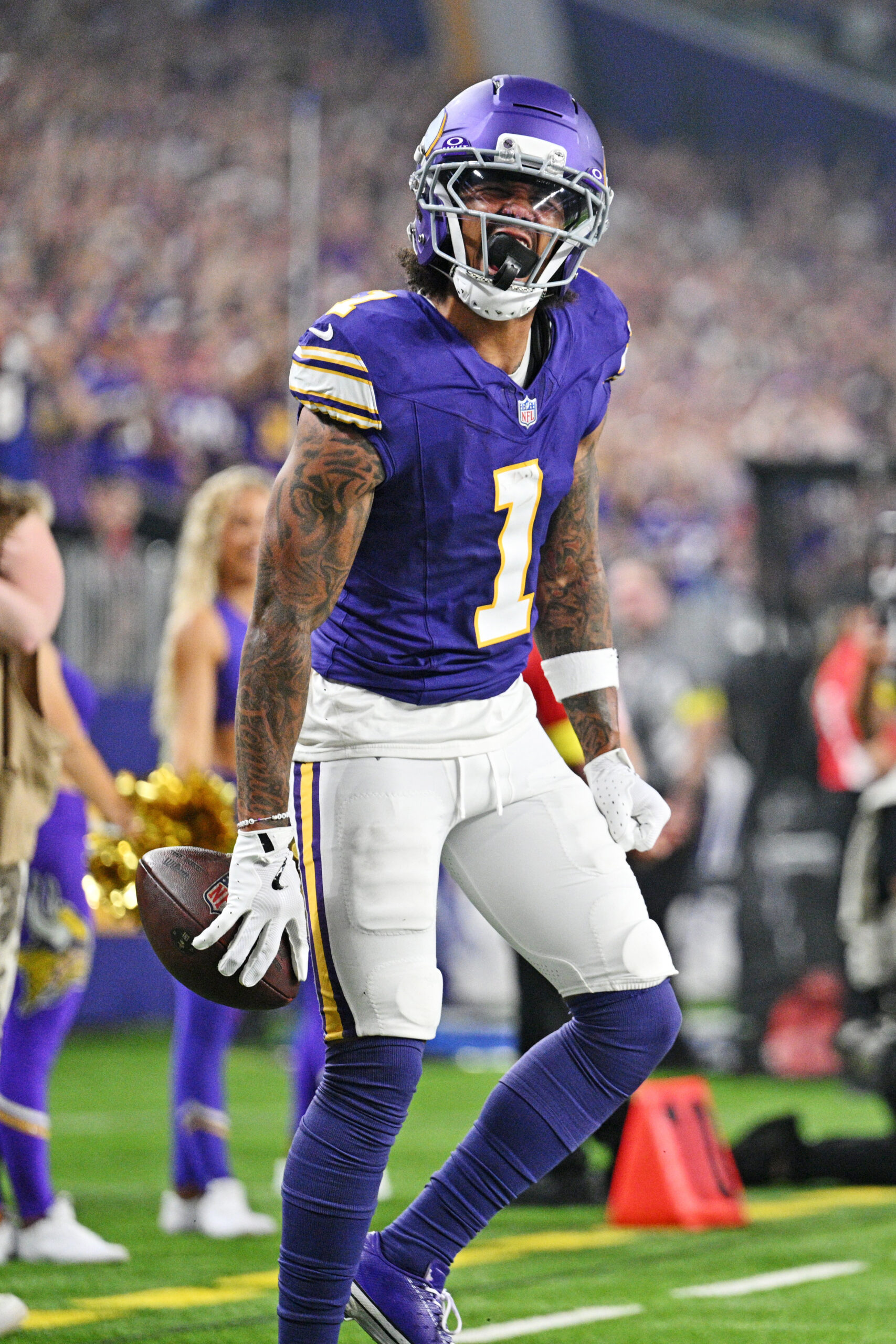 Kelly retired at 32 after a concerning Vikings season. Signing a two-year deal worth $18MM ($9.25MM guaranteed), the former Colts All-Pro suffered three concussions. He gives way to Blake Brandel, who started 17 games at left guard in 2024.
A Duluth, Minn., native who made two Pro Bowls, Ham played nine Vikings seasons. While he maxed out at 404 offensive snaps in a season (2020), the fullback position peaked in prestige decades ago. Ham was a quality special-teamer with his home-state team, and he joins longtime teammate Adam Thielen as Minnesota natives to hang up their cleats in 2026.
Sneaking onto our FA list at No. 50, Nailor commanded attention from a Raiders team desperate to help Fernando Mendoza. The Vikings’ K.J. Osborn WR3 successor did far better in free agency, landing a three-year deal worth $35MM ($18MM at signing).
The Vikings could not afford to retain Nailor, with Jefferson on a big-ticket deal and Addison tied to a first-round contract that will now carry a guaranteed fifth-year option salary in 2027. The team may have upgraded via Jennings, however. UDFA Myles Price (17 offensive snaps in 2025) looks to be in front of ’25 third-rounder Tai Felton for the WR4 role entering the season.
Extensions and restructures:
 With Smith off the roster, O’Neill is the longest-tenured Viking. The 2018 second-round pick has been in place as Minnesota’s starting right tackle since Week 6 of his rookie year. Minnesota extended O’Neill before his 2021 contract year, handing out a five-year deal worth $92.5MM. For non-quarterbacks, five-year extensions have become a bit antiquated due to the cap spikes coming from the 2020 CBA; O’Neill, however, remained a productive player into another contract year and was able to squeeze out another strong payday.
Not missing more than three games in a season on his second contract, O’Neill has started for three playoff teams. Both his Pro Bowls have come as an alternate. Despite this and the fact that O’Neill’s five-year second contract meant he was not up for a new one until just before his age-31 season, he still became the NFL’s second-highest-paid RT at the time of signing.
After the Bears raised the RT ceiling for Darnell Wright in August, O’Neill’s $24MM-per-year July agreement ranks third at the position (behind Wright and Eagles stalwart Lane Johnson). O’Neill’s camp did well here — in what became Teasley’s first notable contract finalized as a GM — to provide the seasoned blocker with two fully guaranteed years in his 30s. The Vikes have an out in 2028, with O’Neill’s $22.39MM salary locking in on Day 3 of the ’28 league year. This becomes a pay-as-you-go deal over the contract’s final three years.
Jones joined 2017 RB draft classmate Alvin Kamara in accepting an offseason pay cut. For Jones, this marked his second career pay slash. He also reduced his salary with the Packers in 2023, before declining a bigger slash in 2024 and eventually being released.
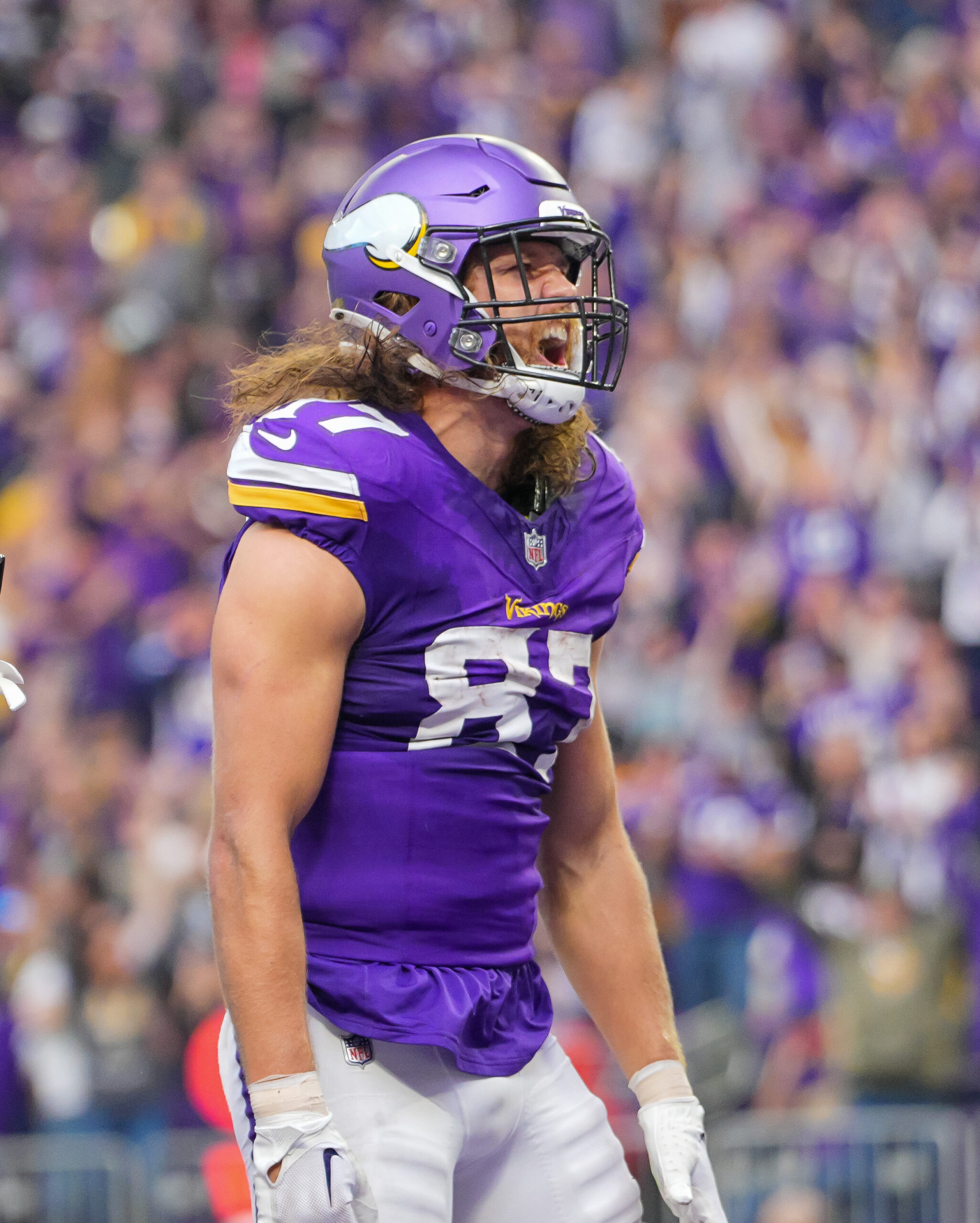 One of this era’s more underrated RBs (four 1,000-yard rushing seasons, one Pro Bowl), Jones missed five games due to injury last season and saw trade pickup Jordan Mason cut into his workload. Minnesota will retain Jones for at least one more season, with the 10th-year vet agreeing to a pay cut in exchange for a $5MM 2026 guarantee.
Hockenson, 29, delivered in Year 1 on his then-TE-record extension (four years, $66MM) but has failed to eclipse 500 receiving yards in either season since. Hockenson missed seven games in 2024 while recovering from the knee injury he sustained late in 2023, and no Vikes pass catcher came out of 2025 unscathed due to basement-level QB play. Hockenson averaged a career-low 8.6 yards per catch, totaling only 455 in 15 games.
The move dropped Hockenson’s cap number from $21.3MM (which topped all tight ends in 2026) and removed a year from the former top-10 pick’s contract. 31.
Draft:
- Round 1, No. 18: Caleb Banks (DT, Florida) (signed)
- Round 2, No. 51 (from Panthers): Jake Golday (LB, Cincinnati) (signed)
- Round 3, No. 82: Domonique Orange (DT, Iowa State) (signed)
- Round 3, No. 97: Caleb Tiernan (T, Northwestern) (signed)
- Round 3, No. 98 (from Eagles): Jakobe Thomas (S, Miami) (signed)
- Round 5, No. 159 (from Panthers): Max Bredeson (FB, Michigan) (signed)
- Round 5, No. 163 (from Eagles): Charles Demmings (CB, Stephen F. Austin) (signed)
- Round 6, No. 198 (from Vikings via Texans, Vikings and 49ers): Demond Claiborne (RB, Wake Forest) (signed)
- Round 7, No. 235 (from Panthers): Gavin Gerhardt (C, Cincinnati) (signed)
 When the Bills and Jets brought in outside GM hires post-draft, the new bosses — Brandon Beane and Joe Douglas, respectively — inherited All-Pro talent via their predecessors’ final first-round picks (Tre’Davious White, Quinnen Williams). The early returns on Banks have not been good, but the interior D-lineman obviously will be given time to develop. The decisionmakers behind the pick, unlike the previous Bills and Jets situations, are still in-house.
Daniel Jeremiah and Dane Brugler’s big boards at NFL.com and The Athletic respectively ranked Banks 51st and 52nd in this class. The SEC product was also coming off a season marred by a foot fracture and then a pre-draft process derailed by a reinjury.
Fracturing the foot last summer and playing in three games last season, Banks re-broke it before the Combine. Overall, he has undergone three surgeries to address the issue. But the 327-pound DT did not endure a fall down the board; he ended up benefiting from a Vikings team believing in him more than the draft community.
The Vikings ditched three veteran DTs (Allen, Hargrave, Harrison Phillips) between August and March, highlighting Banks’ development. The 6-foot-6 lineman did start three years for the Gators, and a pre-camp report indicated the Vikes viewed him as a capable Week 1 starter (provided he was healthy). It does not appear Banks will be in Minnesota’s Week 1 lineup. Banks revealed he was not in great shape due to missing most of his final college season and returning to rehab this offseason. He is more of a project, and Minnesota is set to replace Allen and Hargrave with Levi Drake Rodriguez and Tyrion Ingram-Dawkins.
Cashman’s contract voids early next year, though Eric Wilson secured a $4.86MM guarantee for 2027. The Vikings added a younger talent in Golday, who figures to move into a starting role by next season at the latest. Brugler actually had Golday (48th) ranked above Banks in this class.
 Like Van Ginkel, Golday brings versatility to Minneapolis. Primarily an edge rusher at Central Arkansas, Golday transitioned to ILB at Cincinnati and earned first-team All-Big 12 acclaim last season. The players blocking Golday’s path are not as imposing as those who stood in Turner’s way, and the Vikings will count on the former FCS recruit to infuse youth into a linebacking corps that also has the demoted Pace unsigned beyond 2026.
Following the loss of the aforementioned vets, the Vikings doubled down on DT help by adding Orange with their own third-round choice. Like Golday, the starters — excepting Jalen Redmond — do not look to present too much resistance here. Orange started multiple seasons as Iowa State’s nose tackle and will be groomed to take over that role.
Tiernan was a three-year Northwestern left tackle starter, last being the Wildcats’ RT in 2022. The LT spot is unlikely to be available in Minnesota (due to Christian Darrisaw’s presence) for a while. A swing role will be in Tiernan’s future, but the team’s Van Demark RFA offer sheet puts the veteran in that position for at least 2026.
Chosen with the first of the Greenard-obtained Eagles picks, Thomas — the Vikes have a Jakobe Thomas and Jacob Thomas at safety presently — is set to be a backup to open the season. With the team losing Smith and Camryn Bynum in consecutive offseasons, Jakobe Thomas (a Middle Tennessee State recruit who snared five INTs in his lone Miami season) looks likely to have a bit of time to grasp Flores’ complex defense from the sidelines.
Other:
A season that saw Justin Jefferson — at worst a top-three NFL wideout — total 1,048 receiving yards and two TDs in 17 games is not a great barometer for Addison. The Wentz/McCarthy/Brosmer mess had Minnesota ranked 29th in passing, and Addison posted a career-low 610 yards. Illustrating the panic on McCarthy, Addison’s rookie year — when Kirk Cousins’ Achilles injury keyed a second-half QB carousel — included a career-high 910 yards and 10 touchdown catches.
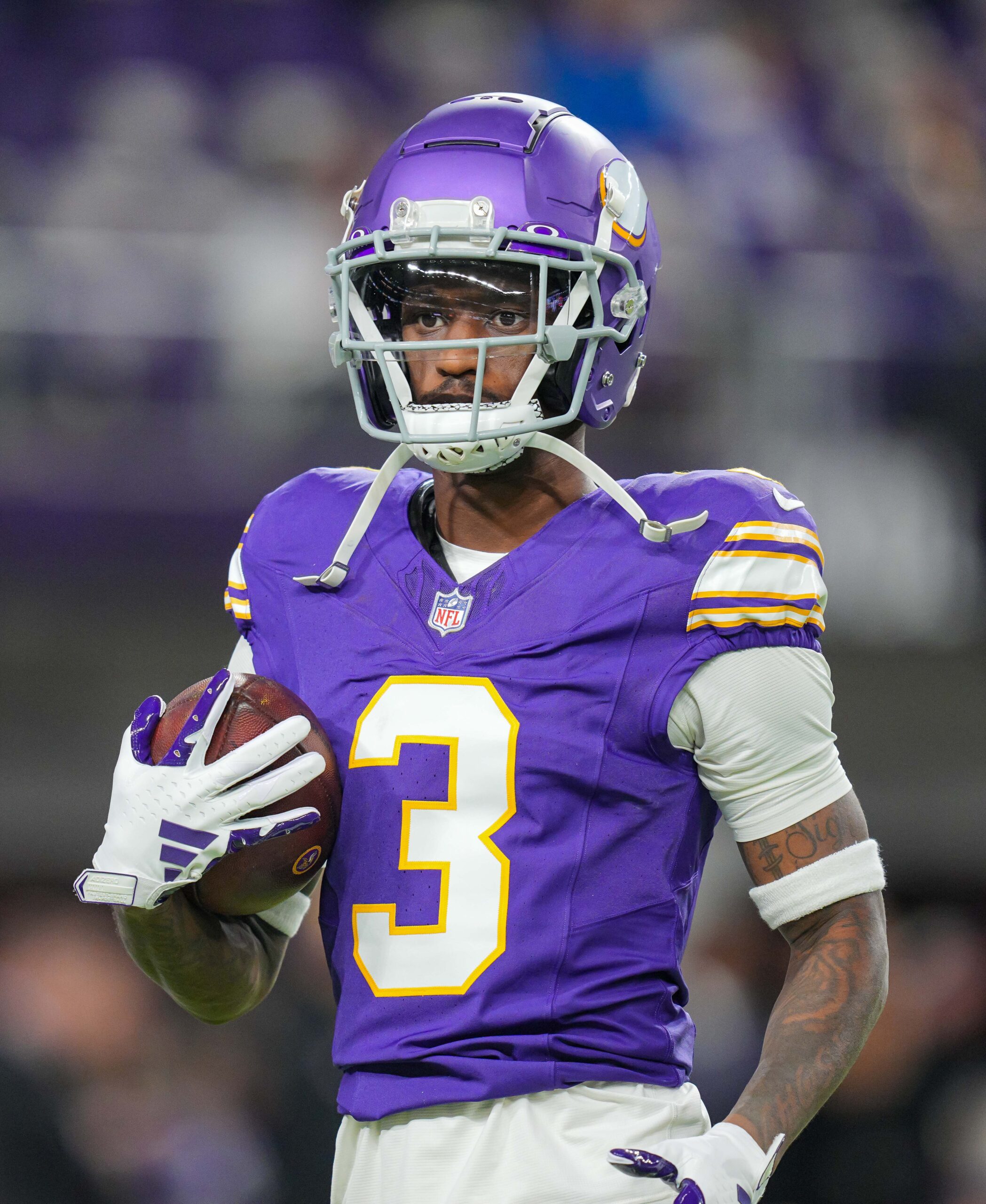 While maybe not faring as well as the Seahawks (Jaxon Smith-Njigba) or Ravens (Zay Flowers) in a 2023 draft that saw four receivers go off the board consecutively from Nos. 20-23, the Vikings have still received positive returns on Addison — the last of those WRs chosen. That said, the off-field issues Addison has encountered will rightfully delay an extension.
A speeding citation, when he was clocked at 140mph, in 2023 preceded a 2024 DUI arrest that brought a three-game suspension. Although Addison’s January trespass arrest brought dropped charges, he has given the Vikings pause regarding a big payday.
The fifth-year option will help the Vikings both further evaluate Addison and give them at least one more year of a rookie-deal cap charge complementing Jefferson’s big-ticket contract. With McCarthy likely not the team’s long-term QB option, the Vikes’ payroll blueprint may be changing as well. Barring a substantial Murray raise in 2027, it is possible the Vikings could be tied to another rookie-deal QB beginning next year. That would allow for bigger expenses elsewhere on the roster.
A strong Addison season with Murray at the helm — and, nearly as important, a clean off-field year — will boost his extension case. With Jefferson likely to land a third contract from the Vikings at a late-2020s juncture, Addison also profiles as a player to watch in 2027 trades.
Top 10 cap charges for 2026:
- Justin Jefferson, WR: $21.22MM
- Andrew Van Ginkel, OLB: $19.25MM
- Will Fries, G: $17.22MM
- T.J. Hockenson, TE: $15.61MM
- Brian O’Neill, RT: $14.83MM
- Christian Darrisaw, LT: $13.28MM
- Aaron Jones, RB: $10.21MM
- Josh Oliver, TE: $9.93MM
- Jauan Jennings, WR: $9.53MM
- Blake Cashman, ILB: $19.28MM
Significant availability issues grip the Packers (Micah Parsons, Josh Jacobs), Bears (Kyler Gordon, Coby Bryant, Ozzy Trapilo) and Lions (Brian Branch, Kerby Joseph — after the Terrion Arnold cut). A door could be open for the Vikings, but their path through it will obviously hinge on Murray’s form and fit in O’Connell’s offense.
Minnesota connections to the inconsistent passer forming so early this offseason points to internal faith O’Connell can make this clunky fit work. If it doesn’t, a team with a solid roster will stand at a crossroads. If Murray can follow the Darnold, Daniel Jones, Geno Smith and Baker Mayfield arcs, a Vikings team that respectively passed on 2024 and ’25 paydays for Cousins and Darnold will be faced with a familiar decision in 2027 (Teasley’s former employer has also been known in recent years to cash out on QBs rather than overpay them).
Murray presenting a Cousins- and Darnold-like situation would be a good problem for the Vikes to have given the apparent McCarthy miss. O’Connell reigniting the dual-threat performer would solidify his status as one of the league’s great QB coaches. The roster that awaits Murray does not exactly rival the Seattle crew Darnold just piloted to a championship, however; the diminutive veteran’s viability on his second NFL team will overshadow everything else Vikings this season.
