
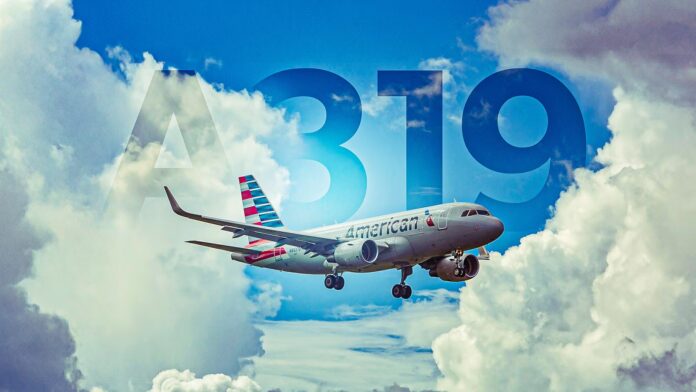
An American Airlines flight, an Airbus A319 departing from Phoenix (PHX) declared Mayday shortly after takeoff after another aircraft spotted flames in one of the Airbus’ engines. This led the crew of a trailing SkyWest-operated flight to warn air traffic control of the warning, and as a result, the plane returned to Phoenix.
American flight 3230 was a scheduled service departing from Phoenix to Portland (PDX). The flight promptly returned to Phoenix as the incident was unfolding.
Mayday, Mayday, Mayday: AA3230 Returns To Phoenix

The pilots on board the American service bound for Portland had initially confirmed to air traffic control that the aircraft experienced hydraulic problems shortly after departure, and as a result, the flight would need to return to Phoenix.
Moments after, as reported by Flightdrama, the crew then came across the radio declaring ‘Mayday, Mayday, Mayday‘ and requesting vectors to return to Phoenix (a specific compass heading which is assigned by local air traffic control (ATC) that assists in guiding a pilot’s flight path using surveillance data like radar).
Simple Flying reached out to American for comment on the flight, and promptly received the below response from an airline spokesperson:
American Airlines flight 3230 returned to Phoenix (PHX) due to a mechanical issue. The aircraft landed safely, taxiied to the gate under its own power and was taken out of service to be inspected by our maintenance team. Customers deplaned normally and will re-depart this evening on a new aircraft. Safety is our top priority and we thank our team members for their professionalism and apologize to our customers for the disruption in their travel plans.
Flames Coming From The Engine On American A319 Carrying 120 Onboard

As the crew declared Mayday, air traffic controllers asked a series of questions to the flight crew, including whether the plane needed to burn off excess fuel. The pilots confirmed that 120 people were onboard. A review of flight data from the Simple Flying Flight Tracker identifies the following movements of the aircraft:
AA3230 was a scheduled daily service to Oregon, with the flight to Portland expected to depart at 3:58 PM. The service was shortly delayed and eventually pushed back from the gate at Phoenix at 4:14 PM, 16 minutes behind schedule. Taking off from the Arizona airport in a westerly direction, the jet spent just a total of 20 minutes in the air before touching down safely in Phoenix at 4:34 PM.
Upon arrival in Phoenix, the plane was able to land safely and taxi to the gate without assistance. The plane has since been removed from service, and the passengers were deplaned normally and were rebooked onto a replacement service later this evening that departed at 5:45 PM and arrived in Portland at 7:54 PM local time.
Aircraft Information: N703UW

The jet at the centre of the incident was N703UW. The 28-year-old A319-112 carries serial number 904 and was initially delivered to US Airways in 1998, before being transferred into the American fleet, following the airline’s merger in 2013. The aircraft is configured with up to 132 seats in a two-class layout (including Domestic First and Main Cabin). Full details below as per ch-aviation:
|
Aircraft Registration |
N703UW |
|---|---|
|
Serial Number (MSN) |
904 |
|
Hex Code |
A9618A |
|
Aircraft Type |
Airbus A319-112 |
|
First Test Flight |
October 9, 1998 |
|
German Airbus Registration |
D-AVYI |
|
Aircraft Age |
28.1 years |
|
Delivery Date |
|
Following the recent incident on the flight departing Phoenix, the aircraft remains grounded while further inspections are undertaken by the carrier’s maintenance teams. The quick actions by the crew onboard, and thanks to the quick spotting by the following SkyWest service, helped relay vital information to air traffic control on the unfolding situation in Phoenix.
The crew onboard flight 3230 took rapid action with clear coordination to establish the critical emergency details early, allowing ground and air teams to coordinate without delay and ensure the prompt return of the aircraft to the ground and the safety of all occupants onboard.
